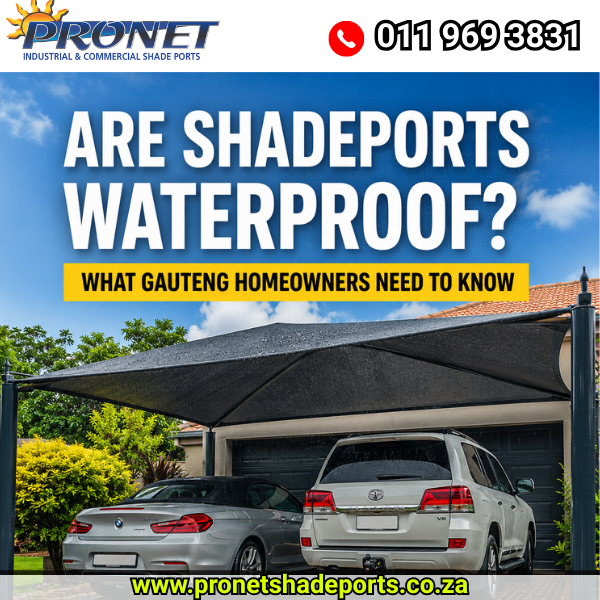
Standard shadeports are not waterproof. The fabric used, a woven High-Density Polyethylene (HDPE) mesh, lets water pass straight through. It blocks UV rays and takes the edge off hail, but during a Highveld storm your car will get wet. Waterproof shadeports do exist, using coated or laminated fabrics that shed rain entirely, but they’re a different product with different installation requirements. Pronet Shadeports & Carports Gauteng installs both standard and waterproof shadeport structures across Johannesburg, Pretoria, Centurion, Midrand, Randburg, and the wider Gauteng region.
Are Shadeports Waterproof?
We’ll Tell You Exactly What to Expect
Standard shadeports aren’t waterproof — but there are options that are. Pronet installs standard HDPE shadeports, waterproof canopy structures, and steel-roofed carports across Johannesburg, Pretoria, Midrand, Centurion, Randburg, and the East Rand.
Key Takeaways
| Question | Short Answer |
|---|---|
| Are standard shadeports waterproof? | No, water passes through the HDPE mesh |
| Can I get a waterproof shadeport? | Yes, using coated or laminated fabric |
| Does waterproof fabric trap heat? | Yes, reduced airflow underneath |
| Do waterproof shadeports need gutters? | Yes, drainage planning is essential |
| Who installs shadeports in Gauteng? | Pronet Shadeports & Carports Gauteng |
What Standard Shadeport Fabric Is Made Of
The mesh used in most shadeports is a breathable, porous HDPE netting, woven loosely enough that air and water both pass through it freely. This is not a flaw in the design. Standard shadeports were built to filter UV radiation and reduce solar heat gain, not to act as a roof. The material does those two jobs very well, cutting UV exposure by 70–90% and keeping the space underneath noticeably cooler than direct sun would.
What the mesh doesn’t do is block rain. A light drizzle might barely matter, but any proper summer storm in Johannesburg or Pretoria will come straight through. Most people figure this out the first wet season after installation, which is why it’s worth understanding the difference between shade cover and rain cover before the steel goes in the ground.
Standard HDPE mesh is also considerably lighter than waterproof alternatives. That weight difference matters for frame design, since steel carport frames are built around load calculations and the cover material is part of that equation. A 20×20 carport installation in Gauteng with a waterproof canopy needs a heavier frame spec than the same footprint with standard shadenet.
How Waterproof Shadeports Work
Waterproof shadeport covers use coated, laminated, or non-porous fabric instead of woven mesh. Rain hits the surface, pools briefly, and runs off the edge rather than filtering through. The carport structure underneath stays dry.
Three things change immediately once you go this route:
- Pitch is not optional. Because water cannot escape downward through the fabric, the cover must be tensioned at an angle. A flat or sagging waterproof canopy holds standing water, which strains the frame and eventually tears the fabric at the anchor points.
- Drainage needs a plan. The runoff has to go somewhere. Without gutters or a directed edge, water concentrates on one side and drops in a stream, which erodes paving, soaks foundations, and creates pooling against walls over time.
- The space underneath gets warmer. Standard mesh is porous and allows hot air to rise and escape. A sealed waterproof cover doesn’t breathe, so heat builds up beneath it. On a 35°C Highveld afternoon this is noticeable, particularly if the covered area is used as an entertainment or braai space rather than just parking.
Standard vs Waterproof Shadeports: Side-by-Side
| Feature | Standard Shadeport | Waterproof Shadeport |
|---|---|---|
| Rain protection | None | Full |
| UV protection | 70–90% | Near total |
| Hail mitigation | Moderate | Strong |
| Airflow underneath | Good | Reduced |
| Pitch requirement | Flexible | Strict minimum angle required |
| Gutter system needed | No | Yes |
| Frame load | Lower | Higher |
| Best suited for | Sun and hail protection | Full weatherproofing |
Which Shadeport Type Makes Sense for Your Property
The right choice depends entirely on what the structure needs to do. If your main concern is keeping vehicles out of direct sun and protected during Gauteng’s hail season, a standard shadeport handles that well and costs less to install and maintain over time.
If you’re covering a patio, outdoor kitchen, or entertainment area where getting rained on is a genuine problem, a waterproof canopy is the better fit. Shadenet carport installations in Pretoria and surrounding areas like Centurion and Midrand often include waterproof options for exactly this reason.
There’s a third option that often gets overlooked. A steel carport with a chromadek or IBR steel roof gives full rain protection with no tensioning requirements and no drainage calculations. For double carports, 2-car carports, or larger structures, a steel roof is frequently the most practical long-term solution. Johannesburg gets roughly 750mm of rain annually, most of it in short, heavy afternoon storms between October and March. A structure that was designed around that rainfall pattern will outperform one that wasn’t.
For a full breakdown of carport prices and shadeport options across structure types and sizes, that page covers the common configurations and materials side by side.
What Pronet Installs and What to Expect
Pronet Shadeports & Carports Gauteng installs standard HDPE shadeports, waterproof canopy structures, and steel-roofed carports across Gauteng, including Boksburg, Germiston, Edenvale, Springs, Roodepoort, and Sandton. Every structure is custom fabricated and anchored to the specific property. The pitch, drainage path, and frame load spec are worked out before installation begins, not on the day.
What Pronet doesn’t install is prefabricated flat-pack kits or lightweight pop-up shade sails. The work is permanent fabrication, and the warranty on materials and workmanship reflects that.
If you’re converting an existing standard shadeport to a waterproof cover, a site visit is necessary first. The existing frame may need reinforcement or re-angling depending on what it was originally built for. You can browse Pronet’s full product and service range for an overview of what’s available, or contact the team directly for a site-specific recommendation.
Frequently Asked Questions
Will a standard shadeport keep my car dry in the rain?
No. The HDPE mesh fabric in a standard shadeport is porous and water passes through it freely. For vehicle rain cover you need either a waterproof canopy or a steel-roofed carport.
Can I convert an existing shadeport to a waterproof one?
Sometimes, yes. It depends on the existing frame’s pitch and structural capacity. Waterproof fabric requires a proper angle to shed water, so the frame often needs adjustment before a conversion is viable. A site inspection is the only way to assess this properly.
Do waterproof shadeports get hot underneath?
They can, particularly in summer. Standard mesh allows hot air to rise and escape through the fabric. A sealed waterproof cover traps that heat beneath it. For vehicle parking this is usually acceptable. For a braai or entertainment area it’s worth factoring into the decision.
What does HDPE mean in shadeport fabric?
HDPE stands for High-Density Polyethylene, a synthetic plastic material woven into a fine porous mesh. It filters UV radiation, reduces heat gain, and softens the impact of hail. It’s the standard fabric material used in residential shadeports across South Africa.
Do waterproof shadeports need a gutter system?
Yes, in practical terms. Because water can’t drain through the fabric it runs off the edge in a concentrated stream. Without gutters or a directed runoff edge this erodes ground surfaces, soaks adjacent walls, and creates pooling. A proper waterproof shadeport installation includes a drainage plan.
What is the difference between a shadeport and a carport?
A shadeport uses fabric mesh as the covering material and is primarily designed for UV and hail protection. A carport typically refers to a steel-framed structure with a solid roof such as chromadek or IBR sheeting, which provides full rain protection. The two terms are sometimes used interchangeably in South Africa, but the covering material is what determines the level of weather protection.
Which shadeport fabric is best for the Gauteng climate?
Standard HDPE shadenet works well for Gauteng’s dry winter season and handles the hail risk in summer. If your priority is rain cover during the summer wet season, a waterproof laminated fabric or a steel roof is the more reliable choice for this climate.