
Key Takeaways
| Cost Factor | Price Range | Details |
|---|---|---|
| Basic Shade Net Carport | R8,000 – R15,000 | Single car, standard materials |
| Metal/Aluminium Carport | R18,000 – R35,000 | Single car, IBR sheeting |
| Premium Carports | R40,000 – R60,000+ | Double car, polycarbonate, cantilever |
| Installation | R2,000 – R8,000 | Varies by complexity and location |
| Permits | R500 – R2,500 | Council approval costs |
Carport costs in South Africa range from R8,000 for basic shade net structures to over R60,000 for premium double carports with polycarbonate roofing. Most homeowners spend between R15,000-R35,000 for a quality single-car metal carport including installation.
Carport prices in South Africa depend on size, materials, and design complexity. A basic single-car shade net carport starts around R8,000, while premium double carports with polycarbonate roofing can exceed R60,000. Most South African homeowners invest between R15,000-R35,000 for a durable metal carport that protects their vehicle properly.
Pronet Shadeports specialises in custom carport solutions across Gauteng, offering everything from affordable shade net structures to premium cantilever designs. Our services cover Johannesburg, Pretoria, Centurion, and Midrand, with expert installation teams handling projects from residential driveways to commercial parking areas. We provide comprehensive quotes that include materials, labour, and council approval assistance where needed.
Understanding Carport Material Costs
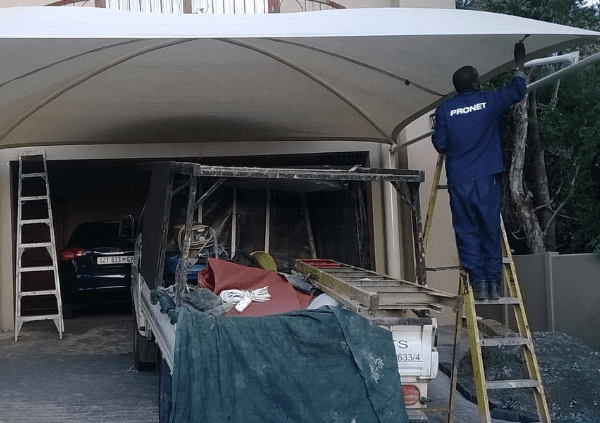
Different materials create significant price variations in carport construction. Shade net carports offer the most budget-friendly option, typically costing R8,000-R15,000 for single-car coverage. These structures use high-density polyethylene fabric stretched over galvanised steel frames, providing excellent UV protection whilst maintaining airflow.
IBR (Inverted Box Rib) sheeting represents the most popular and cost-effective metal roofing choice. This corrugated steel material costs approximately R120-R180 per square metre and offers excellent weather protection. IBR sheeting carports typically range from R18,000-R28,000 for single-car installations, depending on frame specifications and powder coating options.
Polycarbonate roofing delivers premium aesthetics with natural light transmission properties. These translucent panels cost R300-R500 per square metre but create bright, welcoming spaces underneath. Polycarbonate carports start around R25,000 for single-car structures and can reach R45,000+ for larger installations. The material’s durability and UV resistance justify the higher investment for many homeowners.
Solar carport options represent the latest innovation, integrating photovoltaic panels into the roof structure. These systems significantly increase costs to R80,000-R150,000+ but provide long-term energy savings. Solar carports require specialised mounting systems and electrical connections, making professional installation essential.
Single vs Double Carport Pricing
Single-car carports measure approximately 3m x 6m and suit most residential needs perfectly. Basic shade net versions cost R8,000-R12,000, whilst metal alternatives range from R15,000-R25,000. These compact structures fit easily into suburban driveways without overwhelming property aesthetics.
Double carports (6m x 6m or larger) accommodate two vehicles but cost significantly more than twice the single-car price. Material requirements increase substantially, and structural engineering becomes more complex. Expect double carport prices from R25,000 for shade net designs up to R60,000+ for premium metal constructions.
The middle ground option involves tandem carports – single-width structures extended to 9-10 metres length. These designs work well for narrow properties where side-by-side parking isn’t feasible. Tandem carports typically cost 40-60% more than standard single-car versions whilst using less material than full double carports.
How Much Does a Carport Cost in South Africa?
Custom sizing affects pricing substantially. Non-standard dimensions require bespoke engineering and often generate material waste. Adding just one metre to standard carport dimensions can increase costs by R3,000-R5,000 due to structural modifications and custom fabrication requirements.
Design Variations and Their Cost Impact
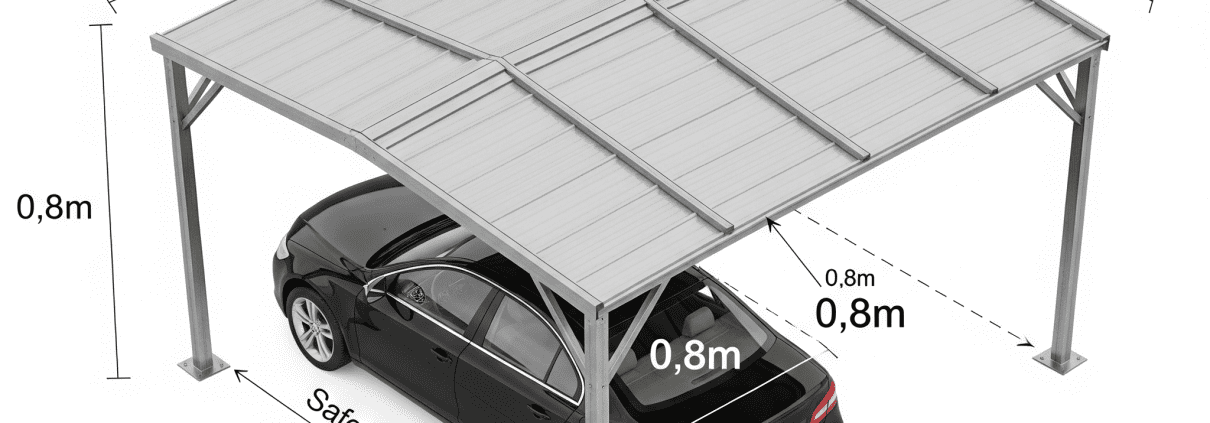
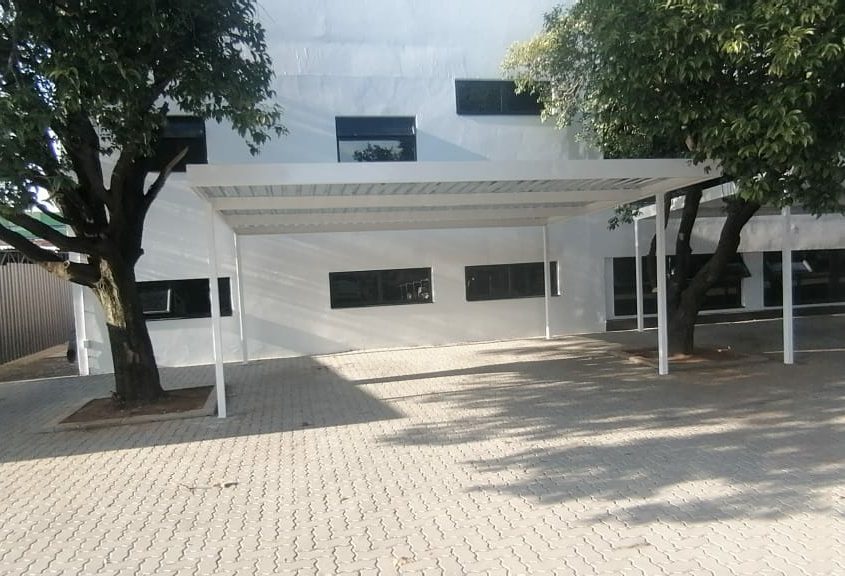
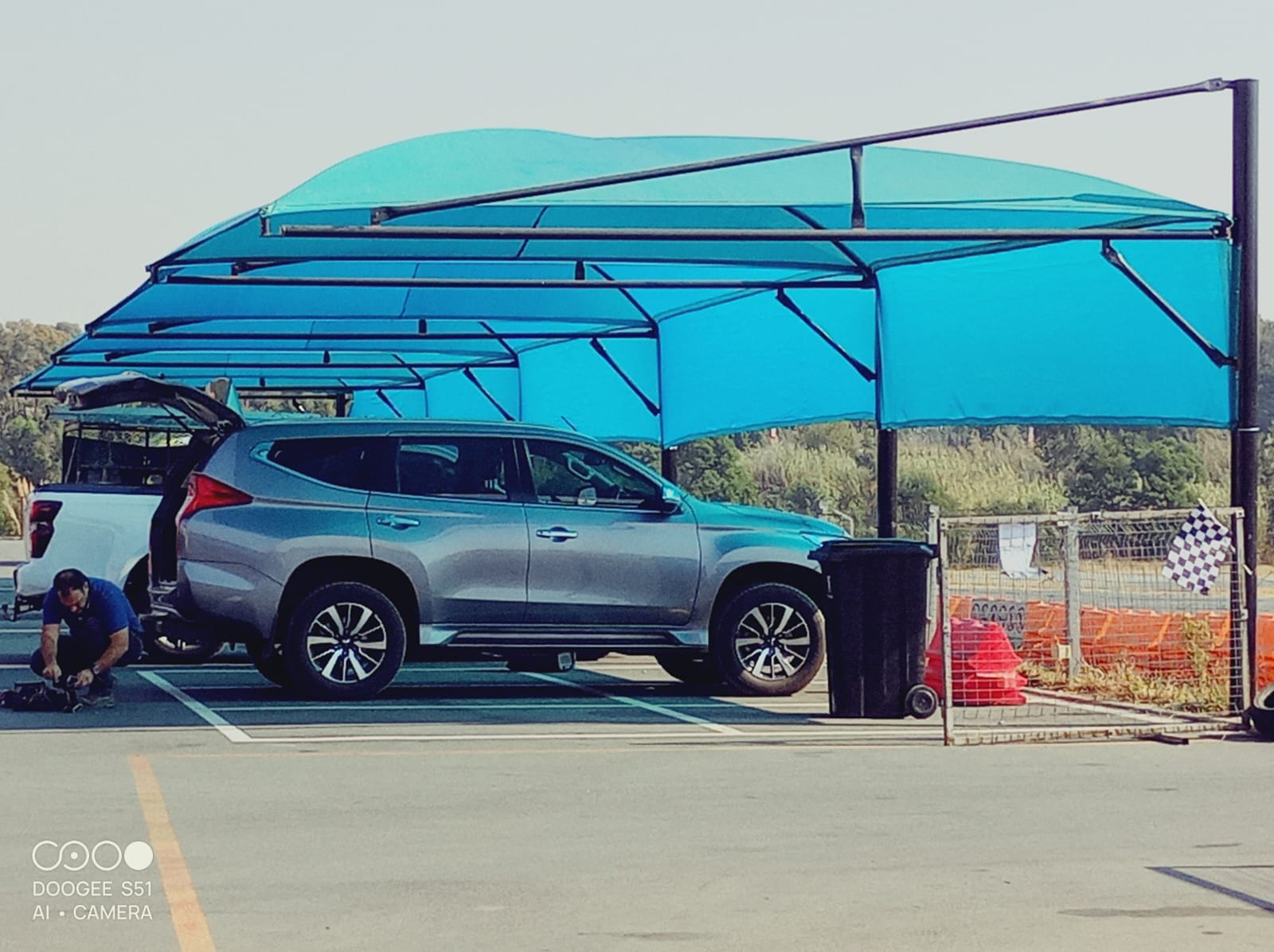
Cantilever carports feature unique support structures with posts positioned away from vehicle parking areas. This design eliminates centre posts that might interfere with car doors but requires stronger engineering. Cantilever structures typically cost 25-40% more than standard designs due to increased material requirements and structural complexity.
Flat roof carports offer the most economical construction method, using minimal materials and simple installation techniques. However, proper drainage becomes crucial to prevent water pooling. Pitched roof designs cost approximately 15-20% more but provide superior weather protection and aesthetic appeal.
Gable-end carports incorporate triangular roof sections that enhance visual appeal whilst improving structural strength. These designs suit traditional home styles but require additional materials and labour. Gable-end additions typically add R3,000-R6,000 to standard carport costs.
Curved roof carports create striking architectural features but demand specialised materials and installation expertise. Curved designs can increase costs by 30-50% compared to standard pitched roofs. These premium structures work particularly well with contemporary home designs where visual impact matters most.
| Design Type | Cost Increase | Best For |
|---|---|---|
| Standard Pitched | Baseline | Most applications |
| Flat Roof | -10% to -15% | Budget builds |
| Cantilever | +25% to +40% | Tight spaces |
| Gable End | +20% to +30% | Traditional homes |
| Curved | +30% to +50% | Modern architecture |
Installation and Labour Costs
Professional installation typically adds R2,000-R8,000 to carport projects, depending on complexity and location accessibility. Simple shade net installations might cost just R1,500-R2,500 in labour, whilst complex cantilever structures can require R6,000-R10,000 in professional services.
Foundation requirements significantly impact installation costs. Concrete footings for metal carports typically cost R500-R1,200 per post, depending on soil conditions and local council requirements. Some areas require engineered foundations due to wind loads or unstable ground conditions.
Site preparation affects labour costs substantially. Level sites with easy access keep installation simple and affordable. Sloped properties or areas requiring excavation can double installation timeframes and costs. We always conduct site surveys before providing final quotes to identify potential complications.
Location-based installation complexity varies across Gauteng. Carport installations in Johannesburg might face different challenges compared to Centurion projects. Urban areas often have restricted access for delivery vehicles, whilst suburban locations might have underground utilities requiring careful excavation.
Powder coating for rust prevention adds R1,500-R3,500 to steel carport costs but extends lifespan significantly. This factory-applied finish provides superior protection compared to paint and maintains appearance longer. Most quality carport manufacturers include powder coating as standard on premium products.
Regional Price Variations Across South Africa
Gauteng carport prices typically represent the national average due to competitive market conditions and material availability. Shadeports Gauteng installations benefit from proximity to steel manufacturing centres and established supply chains.
Carport prices in Pretoria often run slightly lower than Johannesburg due to reduced transport costs and competitive local suppliers. The capital city’s suburban layout also provides easier installation access, reducing labour complications.
Rural areas face higher costs due to transport surcharges and limited installer availability. Remote locations might add 15-25% to standard pricing, particularly for complex installations requiring multiple site visits. Material delivery to distant locations also incurs additional charges.
Coastal regions deal with corrosion challenges requiring upgraded materials and protective coatings. Galvanised steel specifications must meet marine environment standards, potentially increasing material costs by 10-20%. Proper material selection becomes crucial for long-term durability near ocean environments.
| Region | Price Variation | Key Factors |
|---|---|---|
| Johannesburg | Baseline | Competitive market |
| Pretoria | -5% to -10% | Lower transport costs |
| Midrand | Similar to JHB | Good access, competition |
| Centurion | -5% to -8% | Suburban efficiency |
| Rural Areas | +15% to +25% | Transport, limited suppliers |
Council Approval and Permit Costs
Most South African municipalities require building plan approval for permanent carport structures. Council approval requirements vary by area but typically cost R500-R2,500 depending on structure size and complexity.
Building plan submission usually requires architectural drawings and structural calculations. Professional drawing services cost R1,500-R4,000 for standard carports, whilst engineer certifications add R2,000-R5,000 for complex structures. These upfront costs prevent future legal complications and ensure structural safety.
Temporary or removable carports sometimes avoid permit requirements, but permanent installations almost always need approval. Council processing times range from 2-8 weeks, so planning ahead prevents project delays. Some municipalities offer expedited services for additional fees.
Property line setbacks affect carport placement and might require boundary wall modifications. Standard setback requirements range from 1-3 metres depending on local bylaws. Violating setback rules can result in expensive modifications or complete structure removal.
We assist customers with permit applications and maintain relationships with local councils across our service areas. This expertise streamlines approval processes and ensures compliance with all relevant building codes and safety standards.
Premium Features and Add-ons
Integrated lighting systems enhance carport functionality whilst adding R2,000-R5,000 to project costs. LED strip lighting along roof edges provides excellent illumination for evening vehicle access. Motion sensors add convenience whilst reducing electricity consumption.
Built-in storage solutions maximise carport utility beyond vehicle protection. Wall-mounted cabinets, tool racks, and bicycle storage cost R1,500-R4,000 depending on specifications. These additions work particularly well in double carports where extra space exists.
Automated systems like remote-controlled gates or retractable sides create premium carport experiences. Electric gate systems start around R8,000 whilst retractable weather panels cost R5,000-R12,000. These features suit high-end residential applications where convenience justifies additional investment.
Side panels provide enhanced weather protection but increase material and installation costs. Partial panels covering prevailing wind directions cost R3,000-R6,000, whilst full enclosure systems can add R8,000-R15,000 to basic carport prices. Panel materials range from shade cloth to clear polycarbonate.
Guttering and downpipes manage rainwater effectively whilst protecting foundation areas. These additions cost R1,200-R2,500 but prevent erosion problems and allow rainwater harvesting. Proper drainage extends carport lifespan whilst protecting surrounding landscaping.
Frequently Asked Questions
How long does carport installation take?
Most standard carports require 1-3 days for installation, depending on size and complexity. Simple shade net structures often complete in one day, whilst premium metal carports with concrete foundations might need 2-3 days. Weather conditions and site accessibility affect installation timeframes.
Do carports add value to property?
Quality carports typically add 60-80% of their installation cost to property values. Buyers appreciate covered parking, especially in areas with harsh weather conditions. Premium materials and professional installation maximise value addition compared to basic DIY structures.
What maintenance do carports require?
Well-built carports need minimal maintenance beyond annual cleaning and inspection. Check bolts for tightness, clear gutters of debris, and inspect for any damage. Powder-coated steel structures might need touch-up painting every 8-10 years in high-corrosion environments.
Can carports be relocated?
Bolt-together carports can often be dismantled and relocated, though some components might need replacement. Shade net structures relocate more easily than concrete-footed metal carports. Factor in dismantling, transport, and reinstallation costs when considering relocation.
What warranty comes with professional carport installation?
Reputable installers provide 12-24 month workmanship warranties, whilst material warranties vary by manufacturer. Steel frames typically carry 10-15 year structural warranties, whilst shade cloth might have 5-8 year UV degradation coverage. Always confirm warranty terms before finalising installation contracts.
Key Takeaways
| Carport Type | Size Range | Price Range (ZAR) | Installation Time |
|---|---|---|---|
| Basic Metal Carport | 3x6m | R8,500 – R15,000 | 1-2 days |
| IBR Carports | 4x6m | R12,000 – R22,000 | 2-3 days |
| Cantilever Carports | 6x6m | R18,000 – R35,000 | 3-4 days |
| Premium Steel Structure | 6x9m | R25,000 – R45,000 | 4-5 days |
- Most popular size: 6x6m carports cost between R18,000-R28,000
- Council approval: Required for permanent structures over 10m² in most SA municipalities
- Best value: IBR carports offer durability and affordability
- Installation: Professional fitting adds 15-25% to material costs
Carport Pricing in South Africa
Getting a carport built in South Africa isn’t as straightforward as you might think. Prices vary massively depending on where you live, what materials you choose, and who does the installation. I’ve been working with carports for over 15 years, and I’ve seen prices change dramatically based on these factors.
Most homeowners get shocked when they first start shopping around. A basic structure that looks simple enough can cost anywhere from R8,000 to R50,000. The difference comes down to quality, size, and whether you’re going for something that’ll last 5 years or 25 years.
Carport prices in Johannesburg tend to be higher than smaller towns, but you get more supplier options. In Gauteng specifically, competition keeps prices somewhat reasonable compared to remote areas where transport costs add up quickly.
The biggest mistake I see people make is choosing the cheapest option without considering long-term costs. A R10,000 carport that needs replacing in 3 years costs more than a R20,000 structure that lasts 15 years. Material quality makes all the difference here.
How Much Does a 6×6 Carport Cost in South Africa?
A 6×6 metre carport represents the sweet spot for most South African homes. You can fit two average-sized cars comfortably, and it doesn’t dominate your property like larger structures might. Based on current market rates, expect to pay between R18,000 and R28,000 for a quality 6×6 carport.
The price breakdown typically looks like this:
- Basic galvanised steel frame with corrugated sheeting: R18,000-R22,000
- IBR roof with powder-coated frame: R22,000-R26,000
- Premium cantilever design: R26,000-R35,000
Material costs account for roughly 60-70% of the total price. Labour and installation make up the remainder. If you’re handy with tools, some suppliers offer DIY kits that can save you R4,000-R6,000 on installation costs.
Carport prices in Pretoria are similar to Johannesburg rates, though some suppliers offer slightly better deals due to lower overhead costs. The key is getting multiple quotes from different suppliers.
I always recommend budgeting an extra 15-20% above the quoted price. Hidden costs like site preparation, additional concrete work, or permit fees can add up quickly. Better to be prepared than surprised when the final invoice arrives.
How Much Does a Carport Cost in South Africa?
Metal Carports: Durability Meets Affordability
Metal carports dominate the South African market for good reason. They handle our harsh weather conditions better than most alternatives, and maintenance requirements stay minimal if you choose quality materials. Steel frame carports with galvanised coating resist rust for decades.
The most common metal carport configurations use 50x50mm or 75x75mm steel tubing for the frame. Thicker tubing costs more but provides better wind resistance. Given how intense our summer storms can be, especially in Gauteng, I always recommend going with the heavier gauge steel.
Roofing options for metal carports include:
- Corrugated iron sheeting (cheapest option)
- IBR sheeting (better weather resistance)
- Chromadek sheets (premium finish, longer lifespan)
- Polycarbonate panels (allows light through)
Installation and repairs of wall mount carports in Gauteng shows how metal structures can be adapted to different property layouts. Wall-mounted designs save space and often cost less than free-standing alternatives.
The biggest advantage of metal carports is their flexibility. You can extend them later, modify the design, or even relocate them if needed. Try doing that with a brick and mortar structure. This adaptability makes metal carports perfect for growing families or changing needs.
IBR Carports: The Professional Choice
IBR (Inverted Box Ridge) carports have become increasingly popular among South African homeowners who want something that looks more finished than basic corrugated iron. The profile gives a cleaner, more architectural appearance whilst providing excellent weather protection.
IBR sheeting costs about 30-40% more than standard corrugated iron, but the benefits justify the extra expense. Water drainage is superior, wind resistance is better, and the overall appearance looks more professional. Most importantly, IBR sheets last longer due to their design and typically thicker gauge steel.
Installation of IBR carports in Gauteng requires slightly more skill than basic corrugated installations. The sheets need precise alignment and proper fastener placement to maintain weather sealing. This usually adds 1-2 days to installation time.
Colour options for IBR carports include standard colours like charcoal, cream, and red, plus premium colours that cost extra. I’ve found that neutral colours like charcoal or grey hold their appearance better over time compared to bright colours that can fade.
For most homeowners, IBR carports represent the best balance between cost, appearance, and durability. They’re not the cheapest option, but they’re not the most expensive either. The professional appearance often adds more value to your property than the additional cost.
Cantilever Carports: Maximum Space, Premium Price
Cantilever carports offer the ultimate in parking space efficiency. With no supporting posts along one side, you get maximum manoeuvrability for your vehicles. This design particularly suits properties with limited driveway space or awkward access points.
The engineering requirements for cantilever structures push costs higher than conventional carports. Heavy-duty steel beams, specialised brackets, and reinforced foundations become necessary to handle the increased structural loads. Expect to pay 40-60% more than equivalent-sized conventional carports.
Installation and repairs to cantilever carports in Gauteng demonstrates the complexity involved. Professional installation becomes essential – this isn’t a DIY project for weekend warriors.
Popular cantilever configurations include:
- Single cantilever (posts on one side only)
- Double cantilever (central support beam)
- Wall-mounted cantilever (attached to existing structure)
The main limitation of cantilever carports is span restrictions. Most residential applications max out around 6-7 metres before requiring intermediate supports. Beyond that distance, costs increase exponentially due to structural requirements.
Despite higher costs, cantilever carports deliver unmatched functionality. Loading and unloading becomes easier, cleaning underneath is simpler, and the space feels more open. For many homeowners, these benefits justify the premium pricing.
Do Carports Need Council Approval in SA?
Council approval requirements vary significantly across South African municipalities, but general rules apply to most areas. Permanent structures exceeding 10 square metres typically require building plan submission and approval. This includes most carports larger than 3×3 metres.
The approval process usually takes 4-8 weeks and costs between R2,000-R5,000 depending on your municipality. Required documents include site plans, structural drawings, and proof of professional engineer approval for larger structures.
Some councils allow expedited approval for standard carport designs. These pre-approved plans can reduce processing time to 2-3 weeks. Check with your local municipality to see if such programmes exist in your area.
Temporary or portable carports often escape approval requirements, but definitions of “temporary” vary between councils. Some allow structures to remain for 6 months without approval, others require removal after 30 days. Always check local regulations before installation.
Non-compliance penalties can be severe. Councils can order structure removal, impose fines, or prevent property sales until compliance is achieved. The approval costs seem expensive until you consider these potential consequences. Always get proper approval rather than risk future problems.
What Type of Carport is Best?
The “best” carport depends entirely on your specific needs, budget, and property constraints. After installing hundreds of carports across Gauteng, I’ve learned that one size definitely doesn’t fit all situations.
For most homeowners with standard budgets and requirements, IBR carports provide the best overall value. They look professional, last 15-20 years with minimal maintenance, and cost reasonably compared to premium alternatives.
Budget-conscious buyers should consider basic metal carports with corrugated iron roofing. While not as attractive as IBR alternatives, they provide excellent weather protection at affordable prices. Expect 10-15 years of reliable service with proper maintenance.
Property owners with space constraints benefit most from cantilever designs despite higher costs. The improved access and reduced post requirements often justify the additional expense, particularly in urban environments with tight driveways.
Carport prices in Midrand reflect these different requirements. Urban properties tend towards cantilever and compact designs, whilst suburban homes prefer larger conventional structures.
Climate considerations also influence material selection. Areas with high wind exposure need heavier gauge steel and stronger foundations. Coastal regions require enhanced corrosion protection through galvanising or specialised coatings.
Carport Prices in Centurion
What Size Should a Carport Be?
Carport sizing requires careful consideration of vehicle dimensions, access requirements, and future needs. Many homeowners underestimate the space required for comfortable vehicle access and end up with structures that feel cramped.
Standard South African vehicle dimensions:
- Compact cars: 4.2m length, 1.8m width
- Mid-size sedans: 4.6m length, 1.8m width
- SUVs and bakkies: 5.2m length, 2.0m width
- Large SUVs: 5.5m length, 2.1m width
For single-car protection, minimum dimensions should be 3×6 metres. This provides adequate clearance around the vehicle for door opening and access. More comfortable sizing would be 3.5×6.5 metres, particularly if you own larger vehicles.
Two-car carports need minimum dimensions of 6×6 metres, though 6×7 metres provides much better usability. The extra length allows for different vehicle sizes and provides walking space between cars.
Carport prices in Centurion show how sizing affects pricing. Moving from 6×6 to 6×8 metres typically adds R3,000-R5,000 to total costs, but the improved functionality often justifies this expense.
Height considerations matter too. Standard carport height is 2.4-2.7 metres, adequate for most vehicles. Higher structures cost more but accommodate roof racks, boat trailers, or other tall loads.
What Size Are Carports in South Africa?
South African carport sizes have standardised around common vehicle dimensions and property constraints. The most popular residential sizes are 3x6m (single car), 6x6m (two cars), and 6x9m (two cars plus storage).
Market research shows these size preferences:
- 3x6m: 25% of installations (small properties, single car)
- 4x6m: 20% of installations (single car with extra space)
- 6x6m: 35% of installations (two compact cars)
- 6x8m: 15% of installations (two cars, comfortable spacing)
- 6x9m and larger: 5% of installations (luxury homes, multiple vehicles)
Commercial and industrial carports use different sizing standards. These structures often accommodate trucks, delivery vehicles, or equipment storage, requiring custom dimensions based on specific requirements.
Regional variations exist across South Africa. Gauteng properties tend towards smaller carports due to space constraints, whilst rural areas often choose larger structures that serve multiple purposes beyond vehicle protection.
The trend towards larger vehicles (SUVs and bakkies) is pushing average carport sizes upward. What was considered adequate 10 years ago now feels cramped with modern vehicle dimensions.
Planning regulations in some municipalities specify minimum and maximum carport sizes relative to property size. Check local requirements before finalising dimensions to ensure compliance with area restrictions.
Frequently Asked Questions
How long does a carport last in South Africa?
Quality metal carports last 15-25 years with proper maintenance. Galvanised steel frames can exceed 30 years in good conditions. Roof sheeting typically needs replacement every 15-20 years depending on material quality and weather exposure.
Can I install a carport myself?
Basic carport installation is possible for experienced DIY enthusiasts, but professional installation is recommended. Structural integrity, weather sealing, and council compliance require proper expertise. DIY installation may void warranties and create liability issues.
What maintenance do carports require?
Annual inspection of fasteners, clearing of debris from gutters, and touch-up painting of scratched areas. Galvanised structures need minimal maintenance beyond cleaning. Check for loose screws or damaged sheeting after severe weather events.
Do carports add value to property?
Quality carports typically add R15,000-R25,000 to property value, depending on size and construction quality. The return on investment varies by location and local market conditions. Well-designed carports enhance property appeal to potential buyers.
What permits are needed for carport installation?
Building plan approval is required for permanent structures over 10m² in most municipalities. Electrical connections need certified electrician installation and local authority approval. Check specific council requirements before starting any installation project.
How much does carport removal cost?
Professional carport removal costs R2,000-R5,000 depending on size and complexity. Disposal of materials adds extra costs. Some contractors offer removal services when installing replacement structures, reducing overall expenses.
How Much Does a Carport Cost in South Africa?
Key Takeaways
| Topic | Key Information |
|---|---|
| Council Approval | Most carports don’t need council approval if under 50m² and meet setback requirements |
| Average Cost | R15,000 – R45,000 depending on size and materials |
| 2-Car Carport Size | Minimum 6m x 6m, recommended 7m x 6m for comfort |
| 6×6 Carport Price | R18,000 – R28,000 including installation |
| Best Materials | IBR sheeting most popular, cantilever designs trending |
| Installation Time | 1-3 days for standard carports |
Article Outline
- Understanding Carport Regulations in Gauteng
- Do Carports Need Council Approval in SA?
- How Much Does a Carport Cost in South Africa?
- How Big Should a 2 Car Carport Be?
- How Much is a 6×6 Carport in South Africa?
- Types of Carports Available in Gauteng
- Installation Process and Timeline
- Maintenance and Repair Services
Understanding Carport Regulations in Gauteng
Getting a carport installed in Gauteng doesn’t have to be complicated, but you need to know the rules first. Most homeowners think they need loads of paperwork and approvals, but that’s not always true.
The National Building Regulations set clear guidelines for carport installations. If your carport is under 50 square metres and meets specific requirements, you can usually skip the council approval process. This saves you time and money – something most homeowners appreciate.
Your carport must be at least 1.5 metres from your boundary line and shouldn’t exceed 4 metres in height. These rules exist to keep neighbourhoods looking decent and prevent disputes between neighbours. I’ve seen too many cases where homeowners ignored these setbacks and ended up having to move their entire structure.
The local municipalities in Gauteng – including Johannesburg, Pretoria, and the East Rand – generally follow these national guidelines. However, some areas have their own additional requirements, especially in established suburbs with strict aesthetic guidelines.
Key regulation points:
- Structure must be under 50m²
- Minimum 1.5m from boundary
- Maximum 4m height
- No enclosed sides (open structure)
Do Carports Need Council Approval in SA?
This question keeps homeowners awake at night, and rightly so. Nobody wants to deal with council officials knocking on their door demanding permits for an “illegal” structure.
The short answer is: probably not, but it depends on your specific situation. Most residential carports fall under what’s called “minor building work” and don’t require formal council approval. This classification covers structures that are temporary, don’t affect the main building’s structure, and serve a simple purpose.
Your carport needs council approval only if it exceeds certain thresholds. These include structures over 50 square metres, those requiring concrete foundations deeper than 600mm, or carports that connect to your main house structure. Some municipalities also require approval for carports in heritage areas or complex developments.
I always tell clients to check with their local municipality first – a quick phone call can save you headaches later. Each municipality has slightly different interpretations of the national regulations. Some are stricter than others, particularly in upmarket areas like Sandton or Centurion.
Approval required when:
- Structure exceeds 50m²
- Deep concrete foundations needed
- Attached to main building structure
- Located in heritage or special zones
Getting approval usually takes 4-6 weeks and costs between R2,000-R5,000 in fees. It’s worth doing if you’re unsure, as retrospective approvals can be more expensive.
How Much Does a Carport Cost in South Africa?
Carport prices in South Africa vary dramatically, and understanding these costs helps you budget properly. The materials, size, and complexity all affect your final bill.
Basic single-car carports start around R15,000 for a simple galvanised steel frame with IBR sheeting. This price includes basic installation but assumes you have a level surface ready. Double carports typically cost R25,000-R35,000, depending on the materials and design complexity.
Premium options like cantilever carports can reach R45,000-R60,000. These designs look more elegant and provide better vehicle access, but they require more engineering and stronger materials. The investment often pays off in property value and convenience.
Labour costs in Gauteng are generally higher than other provinces, adding R3,000-R8,000 to your total project cost. However, local installers understand the soil conditions and weather patterns better, which matters for long-term durability.
Cost breakdown by type:
- Basic single carport: R15,000-R22,000
- Standard double carport: R25,000-R35,000
- Premium cantilever: R40,000-R60,000
- Wall-mounted carport: R18,000-R28,000
Additional costs include site preparation (R2,000-R5,000), council fees if required (R2,000-R5,000), and premium materials like aluminium or powder-coated steel (add 20-30% to base cost).
How Big Should a 2 Car Carport Be?
Getting the size right makes the difference between a carport you love and one you regret building. Too small, and you’ll struggle to park comfortably. Too large, and you’ve wasted money and garden space.
The absolute minimum for a two-car carport is 6m x 6m, but this barely provides enough space. You’ll have tight door clearances and limited room for walking around your vehicles. Most homeowners find this size frustrating after a few months of use.
The recommended size is 7m x 6m, which provides comfortable parking for two average-sized cars. This allows for door opening, walking space, and some storage along the sides. If you drive larger vehicles like SUVs or bakkies, consider going to 8m x 6m or even 8m x 7m.
Height matters too – standard carports are 2.4m high, but if you have a high vehicle or want to maximise the feeling of space, go for 2.7m-3m. The additional cost is minimal compared to the improved functionality.
Recommended dimensions:
- Minimum: 6m x 6m (tight fit)
- Comfortable: 7m x 6m (recommended)
- Spacious: 8m x 6m (premium option)
- Height: 2.4m standard, 2.7m-3m for larger vehicles
Consider your specific needs: do you need storage space, workshop area, or just basic car protection? Some homeowners add a small enclosed section for garden tools or pool equipment, which requires additional planning.

Installation and Repairs of Carports in Gauteng
How Much is a 6×6 Carport in South Africa?
A 6×6 metre carport represents the most popular size choice among South African homeowners. This size provides decent space for two cars while keeping costs reasonable.
Standard 6×6 carports with galvanised steel frames and IBR sheeting typically cost R18,000-R25,000 including installation. This price assumes a reasonably level site and standard soil conditions. If you need extensive site preparation or have challenging ground conditions, add R3,000-R5,000 to the total.
IBR carports remain the most popular choice due to their balance of cost and durability. The corrugated design handles wind loads well and provides good water drainage. Alternative materials like polycarbonate or aluminium sheeting can increase costs by 15-25%.
The installation process for a 6×6 carport typically takes 1-2 days with a skilled team. Ground conditions and site access affect timing – suburban driveways with good access move faster than properties with narrow gates or uneven terrain.
6×6 carport pricing:
- Basic galvanised frame + IBR: R18,000-R22,000
- Powder-coated frame + premium sheeting: R22,000-R28,000
- Cantilever design: R28,000-R35,000
- Additional site preparation: R2,000-R5,000
Quality varies significantly between suppliers, so don’t choose based on price alone. Cheap materials often mean thin steel sections, poor galvanising, or inadequate fasteners that fail after a few years.
Types of Carports Available in Gauteng
The carport market in Gauteng offers several distinct styles, each with specific advantages and ideal applications. Understanding these options helps you choose the right solution for your property and budget.
Semi-cantilever carports provide a compromise between cost and elegance. These designs use fewer support posts than traditional carports while maintaining structural integrity. They work well for properties where you want improved vehicle access without the full cost of a cantilever design.
Pyramid carports offer excellent water drainage and wind resistance. The sloped design from a central peak ensures water flows away efficiently, making them ideal for areas with heavy rainfall. Many homeowners choose this style for its distinctive appearance and practical benefits.
Wall-mounted carports attach to your house structure, saving space and reducing costs. These work well for narrow properties or when you want the carport to appear integrated with your home. However, they require a suitable wall structure and may need council approval.
Popular carport styles:
- Traditional gable: Most affordable, proven design
- Cantilever: Premium appearance, no posts at front
- Semi-cantilever: Balance of cost and elegance
- Pyramid: Excellent drainage, wind resistant
- Wall-mounted: Space-saving, integrated look
Each style has specific engineering requirements and cost implications. Traditional designs cost least but offer fewer aesthetic options. Cantilever designs cost most but provide the cleanest appearance and best vehicle access.
Installation Process and Timeline
Professional carport installation follows a structured process that typically takes 1-3 days depending on size and complexity. Understanding this process helps you prepare properly and know what to expect.
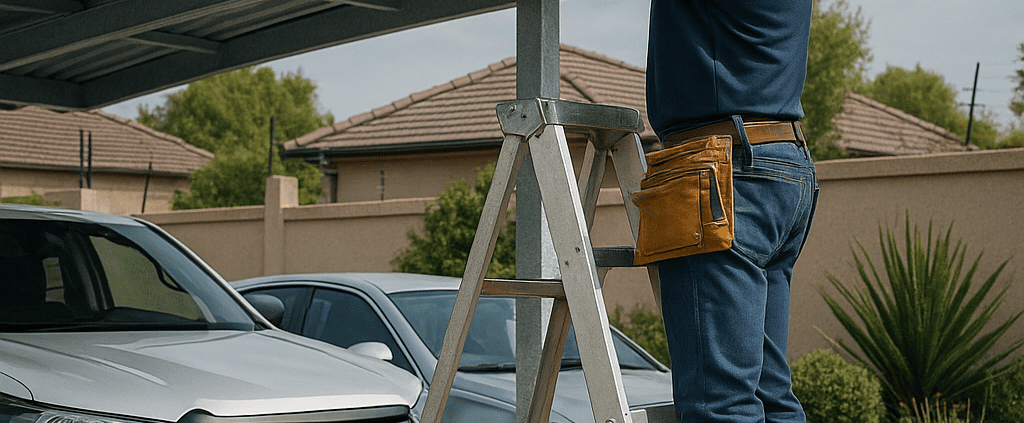
Site preparation begins with marking out the carport location and checking for underground services. We always recommend calling utility companies to mark pipes and cables – hitting a water main or electrical cable turns a simple installation into an expensive disaster. Ground conditions get assessed, and any necessary levelling or excavation happens first.
Foundation work involves digging holes for support posts, typically 600mm-800mm deep depending on soil conditions and carport size. Concrete gets poured and posts set level and square. This stage is critical – poor foundations mean problems later with the entire structure.
Frame assembly happens once foundations cure, usually the next day. Steel sections get bolted together, and the roof structure takes shape. Quality installers check everything is square and level before proceeding to the roofing stage.
Installation timeline:
- Day 1: Site preparation and foundations
- Day 2: Frame assembly and roofing (simple designs)
- Day 3: Finishing touches and cleanup (complex designs)
Weather affects installation timing significantly. Rain delays concrete curing and makes steel work dangerous. Wind speeds above 40km/h typically stop roofing work for safety reasons. Spring and autumn provide the most reliable installation weather in Gauteng.

Installation and Repairs of Carports in Gauteng
Maintenance and Repair Services
Regular maintenance keeps your carport looking good and functioning properly for decades. Most homeowners ignore their carports until problems develop, but simple preventive care saves money and extends lifespan significantly.
Annual inspections should check for loose bolts, damaged roofing sheets, and corrosion spots. Galvanised steel frames rarely need attention for 10-15 years, but fasteners and joints need periodic tightening. Storm damage assessment after severe weather prevents small problems becoming major repairs.
Professional carport repair services handle everything from sheet replacement to structural modifications. Common repairs include damaged roofing from hail, loose or missing sheets after storms, and corrosion repair on older structures. Most repairs cost R1,000-R5,000 and take half a day to complete.
Preventive maintenance costs much less than major repairs. Annual professional inspections cost R500-R800 but can identify problems early when they’re cheap to fix. DIY maintenance involves cleaning gutters, checking fasteners, and touching up paint on minor scratches.
Common maintenance tasks:
- Annual bolt tightening: Prevents structural loosening
- Gutter cleaning: Prevents overflow and foundation damage
- Paint touch-ups: Prevents corrosion spreading
- Sheet replacement: Handles storm or hail damage
Professional repair services handle structural issues, major storm damage, and modifications. Always use qualified installers for anything involving structural changes – carports may look simple, but proper engineering matters for safety and durability.
Frequently Asked Questions
Do I need planning permission for a carport in South Africa? Most carports under 50m² don’t need planning permission if they meet setback requirements and height restrictions. Check with your local municipality first, as some areas have additional requirements.
How long does a carport last in South African weather?
Quality carports with proper galvanised steel frames and good roofing last 15-25 years with minimal maintenance. Cheap materials might only last 5-10 years before needing significant repairs.
Can I build a carport myself? While possible, professional installation ensures proper foundations, structural integrity, and weather resistance. DIY mistakes often cost more to fix than professional installation would have cost originally.
What’s the best roofing material for Gauteng weather? IBR sheeting provides the best balance of cost, durability, and weather resistance. It handles hail reasonably well and provides good drainage during summer storms.
How much does carport insurance cost? Most home insurance policies cover carports as outbuildings at no additional cost. Check your policy details and inform your insurer when you install a new carport.
Can I enclose my carport later? Yes, but enclosing changes the structure classification and may require council approval. Factor this into your initial design if you might want to enclose it in future.
What maintenance does a carport need? Annual inspections, periodic bolt tightening, gutter cleaning, and touch-up painting of scratches. Professional maintenance costs R500-R800 annually.
How deep should carport foundations be? Standard foundations are 600mm-800mm deep, depending on soil conditions and carport size. Clay soils may require deeper foundations or special preparation.
For professional carport installation and repair services in Gauteng, contact our experienced team for a free quote and site assessment.
Installation and Repairs of Carports in Gauteng
