
Key Takeaways
- A shadeport is a cost-effective, open-sided structure that provides protection from sun and light rain
- Shadeport prices in Gauteng typically range from R7,000 to R25,000 depending on size and design
- You generally need municipal approval for permanent shadeport installations in Gauteng
- Shadeports offer better ventilation and are more affordable than solid-roof carports
- Professional installation ensures proper anchoring and structural integrity
- Regular maintenance can extend the lifespan of your shadeport by 5+ years
What is a Shade Port?
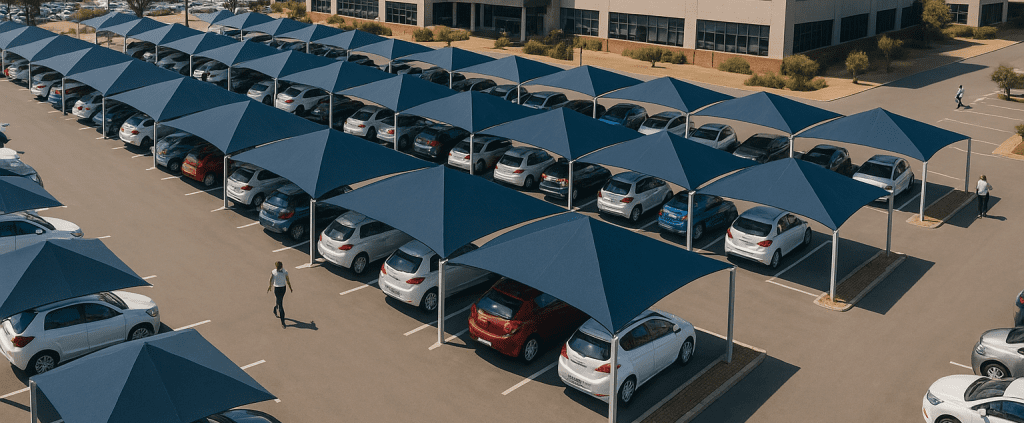
A shade port is basically a structure that gives your car protection from harsh sunlight and light rain. Unlike a garage or solid-roof carport, it’s got an open design with a fabric or shade cloth covering. You’ll see them all over Gauteng these days, from homes to businesses and even schools. They’re super popular cause they’re quick to put up and don’t cost an arm and a leg.
The main part of a shade port is the metal frame, usually made from galvanized steel that won’t rust easily in our Gauteng weather. The top is covered with specially designed shade cloth that blocks harmful UV rays but still lets air flow through. This makes your car much cooler than if it was sitting under a solid roof where heat gets trapped.
Most shade ports you’ll spot around Pretoria and Joburg have a simple design – four posts with shade cloth stretched across the top. But there’s actually loads of different styles available now. Some are attached to buildings on one side, others stand completely separate, and you can even get fancy ones with curved or angled tops for more coverage.
One thing many people don’t know is that quality shade cloth actually blocks between 70-95% of UV rays, depending on what grade you choose. This isn’t just good for your car (protecting the paint and interior), but also creates a usable outdoor space that’s comfortable even on those blazing hot Gauteng summer days.

Types of Shadeports Available in Gauteng
When you’re lookin’ at shadeports in Gauteng, you’ve got quite a few options to pick from. Each type has its own pros and cons, and what works best really depends on your specific needs and property layout.
Cantilever Carports
Cantilever shadeports are super popular in Gauteng neighborhoods because they look so sleek. They only have supports on one side, which means you can park without worrying about door dings from hitting posts. These are perfect if you’ve got limited space or want a clean, modern look.
The cantilever design uses a stronger frame to support the overhang, which means they’re a bit pricier than standard models. But many homeowners in places like Sandton and Centurion feel it’s worth it for the convenience and style. I’ve installed hundreds of these and clients always love how they can open car doors fully without any obstacles.
Pyramid Carports
Pyramid shadeports have a distinctive peaked roof that many people find really attractive. The sloped design isn’t just for looks though – it helps rainwater run off easily, which is handy during those intense Gauteng thunderstorms we get.
These structures are typically supported by four posts, one at each corner. The pyramid design adds structural strength, which means they handle wind better than flat-top designs. They’re especially popular in more upmarket areas like Waterkloof where homeowners want something that complements their architecture.
Semi-Cantilever Carports
Semi-cantilever models offer a middle-ground solution. They have support posts on both sides but they’re set back from the edge, giving you more room to open doors. This design is great for wider spaces where you need to shelter multiple vehicles.
The semi-cantilever is often the most practical choice for many Gauteng families. You get better stability than a full cantilever but more accessibility than a standard four-post design. They’re particularly common in family homes throughout Pretoria East and Midrand.
Standard Four-Post Shadeports
The classic four-post shadeport is still the most common type you’ll see across Gauteng. It’s the most affordable option and super sturdy. The posts are usually positioned at each corner, creating a simple but effective structure.
These are ideal for straightforward installations where budget is a priority. Many businesses choose this style for employee parking areas because they’re cost-effective when you need to cover multiple spots. The standard design is also the easiest to DIY if you’re handy, though professional installation is always recommended for safety.
Custom Shadeport Solutions
Many Gauteng properties have unique requirements that don’t fit standard shadeport designs. Maybe you’ve got an awkward driveway angle or limited space between your house and boundary wall. Custom solutions can address these challenges.
I’ve worked on projects where we’ve created L-shaped designs, extra-height structures for RVs, and even multi-level shadeports for sloped driveways. The possibilities are pretty much endless if you work with a company that offers custom fabrication.
How Much Does a Shadeport Cost?
The cost of a shadeport in Gauteng varies quite a bit, depending on several factors. Let’s break it down so you can budget properly for your project.
Basic Shadeport Prices in Gauteng
For a standard single-vehicle shadeport (about 3m x 5m), you’re looking at roughly R7,000 to R12,000. This price typically includes basic materials and installation. Double-vehicle shadeports (about 6m x 5m) usually cost between R14,000 and R20,000.
But prices can change based on current steel costs, which have been a bit unpredictable lately. I’ve seen prices jump by almost 15% in just a few months when steel shortages hit, so it’s always good to get a current quote rather than relying on old information.
Cost Factors to Consider
Size is obviously a big factor – larger shadeports cost more. But there’s other stuff that affects the price too:
- Design complexity: Cantilever carports typically cost 20-30% more than standard four-post designs because of the additional engineering required
- Material quality: Galvanized steel lasts much longer than painted steel in Gauteng’s climate and costs about 15% more
- Shade cloth quality: Commercial-grade shade cloth with higher UV protection costs more but lasts years longer
- Site conditions: If your property has tricky access or needs ground leveling, this adds to labor costs
- Council approvals: Some areas in Gauteng require building plans and permits, which can add R2,000-R3,000 to your project
Extra Features and Their Costs
Many homeowners choose to add extras to their basic shadeport:
- Gutter systems: R1,500-R2,500 extra
- LED lighting: R1,000-R3,000 depending on complexity
- Side panels (for additional weather protection): R1,500-R2,500 per side
- Concrete base (rather than ground anchors): R3,000-R5,000 extra
Cost Comparison Table
| Shadeport Type | Single Vehicle | Double Vehicle | Triple Vehicle |
|---|---|---|---|
| Standard 4-Post | R7,000-R12,000 | R14,000-R20,000 | R21,000-R28,000 |
| Semi-Cantilever | R9,000-R14,000 | R16,000-R22,000 | R24,000-R30,000 |
| Full Cantilever | R10,000-R16,000 | R18,000-R25,000 | R27,000-R34,000 |
| Pyramid Style | R9,500-R15,000 | R17,000-R23,000 | R25,000-R32,000 |
| Wall-Mounted | R8,000-R13,000 | R15,000-R21,000 | R23,000-R29,000 |
Budget Tips
If you’re looking to save some cash but still get a quality shadeport, here are a few insider tips:
- Consider a wall-mounted design if possible – they use less material and are usually cheaper
- Standard sizes are more affordable than custom dimensions
- Some companies offer discounts during winter months when installation demand is lower
- Get at least three quotes from different suppliers – prices can vary by up to 25% for essentially the same product
Remember that the cheapest quote isn’t always the best value. I’ve seen too many budget installations fail within a couple years because they cut corners on foundations or used thinner steel profiles.

Do I Need Plans for a Shade Port?
This is a question I get all the time from Gauteng homeowners, and the answer isn’t as straightforward as you might think. The requirements vary depending on your location and the size of your shadeport.
Municipal Requirements in Gauteng
In most Gauteng municipalities, you do need some form of approval for permanent shadeport structures. However, the exact requirements differ:
- Johannesburg: Generally requires building plans for structures larger than 9m² or attached to main buildings
- Pretoria/Tshwane: Usually requires site plans for any permanent structure
- Ekurhuleni: Typically needs plans for structures over 12m² or near property boundaries
- Midrand: Often follows Johannesburg regulations but may have specific local requirements
I’ve had clients get into trouble by assuming small shadeports don’t need approval. Even “temporary” structures can require permission if they’re anchored to the ground.
When Plans Are Definitely Required
You’ll definitely need proper building plans if:
- Your shadeport is attached to your house
- It’s larger than 12m² in most areas
- You’re in an estate with architectural guidelines
- The structure is near your property boundary (usually within 1-1.5m)
- The height exceeds 3m at any point
The plans usually need to be drawn up by a qualified draftsperson or architect and submitted to your local building control office. This process typically takes 30-60 days for approval.
When You Might Get Away Without Plans
Some smaller, freestanding shadeports might not require full building plans, especially if:
- They’re under 9m² in size
- They’re not attached to any buildings
- They’re well within your property boundaries
- They’re under 2.5m in height
- They’re designed to be genuinely temporary/movable
However, even in these cases, it’s still smart to check with your local municipality. Some areas have introduced stricter regulations in recent years, and requirements change.
Consequences of Skipping the Planning Process
I’ve seen homeowners face serious consequences for installing shadeports without proper approval:
- Fines ranging from R2,000 to R10,000
- Forced removal of the structure at your own expense
- Difficulty selling your property later (as unapproved structures show up during compliance inspections)
- Insurance issues if damage occurs involving an unapproved structure
Homeowner Associations and Estates
If you live in an estate or complex in Gauteng, there’s almost certainly an additional layer of approval needed. Most HOAs have specific rules about:
- Approved shadeport designs
- Color restrictions (often requiring the structure to match the main building)
- Positioning requirements
- Material specifications
Always check your HOA rules before planning a shadeport installation. I’ve installed hundreds of shadeports across Gauteng and have seen plenty of cases where homeowners had to remove or modify structures that didn’t meet estate guidelines.
Streamlining the Approval Process
To make the approval process smoother:
- Contact your local building control office before starting any work
- Consider using pre-approved designs if available
- Work with installation companies that handle the paperwork as part of their service
- Get input from neighbors who might be affected by the structure
- Have all property boundary information ready to submit
Most professional shadeport companies in Gauteng (like ProNet Shadeports) can help with this process as part of their installation package.
Is a Shadeport Better Than a Carport?
This is one of those questions where the answer depends on your specific needs. Let’s compare shadeports and solid-roof carports to help you decide which is right for your Gauteng home.
Shadeport Advantages
Shadeports have several benefits that make them popular throughout Gauteng:
- Cost-effective: They’re typically 30-50% cheaper than solid-roof carports of the same size
- Better ventilation: The mesh allows air to circulate, keeping your vehicle cooler
- Quicker installation: A standard shadeport can be installed in a day, while IBR carports often take 2-3 days
- Less visible: Their open design makes them less obtrusive and often more acceptable to neighbors and HOAs
- Easier planning approval: Many municipalities have simpler requirements for shade structures
- Flexibility: They can be modified or moved more easily if needed
I’ve installed both types for hundreds of clients, and those who choose shadeports usually appreciate the balance of protection and affordability they offer.
Solid-Roof Carport Advantages
Solid-roof carports like IBR carports also have their place:
- Complete rain protection: They keep vehicles completely dry during Gauteng’s summer thunderstorms
- More robust: They generally handle extreme weather better
- Can collect rainwater: With guttering, they can direct water to tanks for garden use
- More options for lighting: Solid roofs make it easier to install proper lighting systems
- Can match house roofing: Materials like IBR sheeting can be chosen to match your main building
- Greater lifespan: Typically last 15-20+ years compared to 8-12 years for standard shadeports
Best for Gauteng’s Climate
Gauteng’s climate has some specific considerations. We get intense UV exposure year-round but also heavy seasonal rains and occasional hail.
For pure sun protection, shadeports work brilliantly. Quality shade cloth blocks up to 95% of UV rays, which is the main cause of vehicle paint fading and interior damage. And the mesh allows heat to escape rather than building up like it can under solid roofs.
For rain protection, solid-roof carports are definitely better. While shadeports shed light rain, they won’t keep your car completely dry during those famous Gauteng thunderstorms.
For hail protection, both offer some defense, but solid roofs generally provide better protection against larger hailstones.
Cost Comparison
Let’s talk money, since that’s often the deciding factor:
- A standard double shadeport costs around R14,000-R20,000 installed
- A similar-sized IBR carport typically costs R25,000-R35,000
- Wall-mounted carports fall somewhere in between at R15,000-R25,000
Maintenance costs also differ:
- Shadeport cloth may need replacement every 7-10 years (R3,000-R5,000)
- Solid roofs rarely need replacement but may require occasional repairs and repainting
Property Value Considerations
In terms of adding value to your property:
- Well-designed solid-roof carports generally add more value, especially if they match the main building architecture
- Shadeports add convenience but are seen more as temporary structures by property valuers
- Custom designs that complement your property will always add more value than standard options
The Hybrid Option
Some Gauteng homeowners are now choosing hybrid solutions:
- Polycarbonate roofing provides full rain protection but allows light through
- Partial solid roofs with shade extensions give the best of both worlds
- Semi-cantilever designs with different roofing materials for different sections
These options cost more than standard shadeports but less than full solid-roof carports, making them an attractive middle ground.
Making Your Decision
Consider these factors when choosing between a shadeport and carport:
- Budget: If cost is your main concern, shadeports win hands down
- Weather protection: For full protection from rain, choose solid roofing
- Aesthetics: Which style better matches your home’s design?
- Permanence: How long do you plan to stay in your current home?
- Vehicle value: More expensive vehicles might warrant the extra protection of a solid roof
- HOA restrictions: Some estates specify which types are permitted
- Future plans: Will you want to convert the structure later?
In my experience installing both types across Gauteng, most clients are happy with their choice when they’ve carefully considered these factors upfront.

Professional Installation Process for Shadeports
Getting your shadeport professionally installed makes a huge difference to how long it lasts and how good it looks. Let me walk you through what happens during a proper installation in Gauteng.
Site Assessment and Preparation
Before anything else happens, a good installer will conduct a thorough site assessment. This typically involves:
- Measuring the exact dimensions of the installation area
- Checking for underground pipes or cables (this is super important!)
- Assessing the ground type and slope
- Noting any potential obstacles like trees or boundary walls
- Discussing exact positioning requirements with you
I always tell clients that this first step is critical. I’ve seen too many DIY installations fail because they didn’t realize there was a water pipe right where they needed to put a support post.
Once the assessment is complete, the area needs to be prepared. This might involve:
- Clearing vegetation or debris
- Basic leveling if the ground is uneven
- Marking out the exact positions for posts
- Arranging access for delivery vehicles and equipment
Foundation and Support Structure
The foundation work is what separates a lasting shadeport from one that’ll collapse in the first big Gauteng thunderstorm.
For proper anchoring, installers will typically:
- Dig holes for the support posts (usually 600mm deep minimum)
- Pour concrete footings or use ground anchors depending on soil conditions
- Ensure posts are perfectly vertical using spirit levels
- Allow concrete to cure properly before proceeding (many installers rush this step)
Once the foundations are set, the support structure is assembled. Quality installations use:
- Galvanized steel posts (minimum 76mm diameter for standard shadeports)
- Properly welded or bolted connection points
- Bracing where needed for structural integrity
- Rust-proof fixtures and fittings
Frame Assembly and Tensioning
Next comes the frame assembly, which creates the shape of your shadeport:
- Horizontal beams are connected to the support posts
- Cross-bracing is added for stability
- Corner brackets are secured
- The entire frame is checked for square and level
For cantilever carports and wall-mounted designs, this step requires extra precision since the load distribution is more complex.
Shade Cloth Installation
The shade cloth installation is actually quite technical and not just a matter of throwing fabric over the frame:
- The correct grade of shade cloth is selected (usually 80-95% UV block for Gauteng conditions)
- The cloth is carefully measured and cut with allowance for tensioning
- Edge reinforcement is added to prevent tearing
- The cloth is attached to the frame using specialized fittings
- Proper tensioning is applied in stages to prevent warping
- Final adjustments ensure even tension across the entire surface
Proper tensioning is crucial – too loose and the cloth will flap and deteriorate quickly; too tight and it might tear or pull the frame out of alignment.
Quality Control and Finishing
A professional installation finishes with thorough quality control:
- All nuts and bolts are checked for tightness
- Shade cloth tension is verified across the entire surface
- The structure is checked for stability and level
- Any sharp edges are filed down for safety
- The site is cleaned up completely
Good installers will also take the time to explain maintenance requirements and warranty details.
Timeline for Professional Installation
For a standard residential shadeport in Gauteng, here’s a typical timeline:
- Site assessment and quotation: 1-2 days
- Manufacturing/preparation after order: 5-7 business days
- Installation: 1 day for standard designs, 1-2 days for complex ones
- Total timeline from order to completion: 7-14 days
Larger projects or custom designs might take longer, particularly if council approvals are needed.
DIY vs Professional Installation
While DIY installations are possible, there are several reasons professional installation is worth considering:
- Professionals have the right tools and equipment
- They understand local wind patterns and structural requirements
- They can identify and avoid underground services
- Professional installations typically come with warranties
- They have experience solving common installation challenges
Most importantly, I’ve seen professionally installed shadeports survive those intense Gauteng storms that flatten DIY attempts.
Maintenance and Repair Services for Shadeports in Gauteng
Even the best shadeports need a bit of TLC to keep them in good shape, especially in Gauteng’s sometimes harsh climate. Regular maintenance can seriously extend the life of your structure, while prompt repairs can prevent small issues from becoming big problems.
Routine Maintenance Tips
To keep your shadeport in top condition:
- Regular cleaning: Wash the shade cloth 2-3 times a year with mild soap and water to remove dust and prevent mold growth. Joburg’s dusty winters make this especially important.
- Check tensions: Inspect the shade cloth tension after storms or strong winds and adjust if necessary. Cloth that’s too loose can flap and tear, while overtightened cloth puts stress on the frame.
- Inspect for rust: Look for any signs of rust, especially at joints and connection points. Early treatment can prevent structural weakening.
- Clear debris: Remove leaves, branches and other debris that collect on top, especially during fall and after storms.
- Examine fittings: Check that all bolts, nuts and fasteners remain tight. Our temperature variations in Gauteng can cause metal to expand and contract, gradually loosening fittings.
Many people in Gauteng don’t realize that shadeport cloth actually has a limited lifespan. Quality shade cloth typically lasts 7-10 years before UV degradation weakens it significantly. Budget for replacement within this timeframe.
Common Shadeport Problems in Gauteng
After installing hundreds of shadeports across Gauteng, I’ve noticed some regional issues that come up frequently:
- UV damage: Our high-altitude sunlight is particularly harsh, causing premature fading and brittleness in lower-quality shade cloth.
- Storm damage: Those summer thunderstorms can cause tears or loosen fittings.
- Wind problems: Certain areas (particularly parts of Midrand and Centurion) experience strong wind channels that can stress shadeport structures.
- Rust issues: Areas with high humidity or sprinkler coverage can experience accelerated rusting.
- Structural shifting: Clay soils in parts of Gauteng expand and contract significantly between wet and dry seasons, potentially moving footings.
Professional Repair Services
When damage occurs, professional repair services typically offer:
- Shade cloth replacement: Full or partial replacement of torn or degraded cloth
- Frame straightening: Realignment of bent or shifted frames
- Foundation reinforcement: Strengthening of footings that have moved or cracked
- Rust treatment: Removal of rust and application of protective coatings
- Structural repairs: Welding or replacement of damaged components
- Retrofit upgrades: Adding reinforcement to older structures to improve durability
Most repair companies in Gauteng charge between R500-R1500 for minor repairs, while major structural work can cost R2000-R5000 depending on complexity.
When to Repair vs. Replace
Sometimes it’s hard to know whether to repair or just start fresh. Here are some guidelines:
Consider repair when:
- The damage is limited to a specific area
- The frame is still structurally sound
- The shadeport is less than 5-7 years old
- The damage was caused by a specific incident rather than general deterioration
Consider replacement when:
- Multiple components are failing
- The shade cloth is beyond its useful life
- The frame shows widespread rust or structural issues
- Repairs would cost more than 50% of a new installation
- You want to update to a newer design anyway
Choosing a Repair Service
Not all repair services in Gauteng are created equal. Look for:
- Specialists vs. generalists: Companies that focus specifically on shadeports and carports typically have more expertise
- Experience with your specific design: Cantilever and pyramid designs require different repair approaches
- Proper equipment: Professional tensioning tools and lifting equipment are essential
- Material quality: Ensure they use UV-stabilized shade cloth and galvanized or powder-coated metal components
- Warranties on repairs: Good companies stand behind their work with at least a 6-12 month warranty
It’s worth checking if your original installer offers maintenance plans or discounted repairs, as they’ll be most familiar with your specific installation.
Preventative Maintenance Programs
Some companies in Gauteng now offer preventative maintenance programs for shadeports. These typically include:
- Bi-annual inspections
- Tension adjustments
- Minor repairs as needed
- Cleaning services
- Rust prevention treatments
These programs usually cost between R800-R1500 annually but can extend your shadeport’s life significantly and prevent costly emergency repairs.
DIY Repair Options
For minor issues, there are some DIY repairs that most homeowners can handle:
- Small tears: Shade cloth repair kits are available at most hardware stores
- Loose fittings: Tightening bolts and screws with basic tools
- Minor rust spots: Sanding and applying rust converter followed by appropriate paint
- Tension adjustments: Some tension systems can be adjusted with standard tools
However, it’s important not to attempt structural repairs without proper knowledge and equipment. I’ve seen DIY attempts that actually made problems worse or created safety hazards.
Frequently Asked Questions
How long does a shadeport last in Gauteng conditions?
With proper installation and maintenance, a quality shadeport should last 8-12 years in Gauteng. The shade cloth typically needs replacement after 7-10 years due to UV degradation, while the metal frame can last 15+ years if properly galvanized or powder-coated. Regular maintenance can extend these timeframes significantly.
Can shadeports handle Gauteng’s occasional hail storms?
Standard shade cloth offers moderate protection against small to medium hail but may tear with larger hailstones. Heavy-duty shade cloth (130-160gsm) provides better protection. For complete hail protection, consider IBR carports or polycarbonate roofing options instead.
Do I need to remove snow from my shadeport in winter?
While snow is rare in Gauteng, if it does occur, you should remove it from your shadeport as soon as safely possible. Even light snowfall can add significant weight that shadeports aren’t designed to handle, especially when concentrated in certain areas due to sagging.
Can I install solar panels on my shadeport?
Standard shadeports aren’t designed to support the weight of traditional solar panels. However, there are now specialized solar shadeport designs available in Gauteng that incorporate lightweight flexible solar panels into the structure. These need to be planned from the beginning with appropriate structural reinforcement.
How much wind can a shadeport withstand?
Properly installed shadeports in Gauteng should withstand wind speeds up to 80-90 km/h. Cantilever designs may have lower wind tolerance (60-70 km/h) if not properly reinforced. In areas with regular high winds, additional bracing or heavier gauge materials may be recommended.
Can I convert my existing shadeport to a solid roof carport?
Yes, but it requires careful structural assessment. The existing foundation and frame may need reinforcement to handle the additional weight of solid roofing. This conversion typically costs 60-80% of a new IBR carport installation and requires municipal approval in most Gauteng areas.
Are there height restrictions for shadeports in Gauteng?
Most Gauteng municipalities limit residential shadeport heights to 3-3.5 meters. Exceeding these heights usually requires special permission. Height restrictions are typically stricter near property boundaries and in estate developments with architectural guidelines.
Can I install a shadeport myself?
While DIY installation is possible for simple designs, professional installation is strongly recommended. Proper foundation work, structural assembly, and tensioning require specialized knowledge and equipment. Incorrectly installed shadeports can fail dangerously during storms or high winds.
How far from my property boundary can I install a shadeport?
In most Gauteng municipalities, structures must be at least 1-1.5 meters from property boundaries. However, this varies by area and zoning. Some locations allow structures right up to boundaries with neighbor consent, while others have strict setback requirements. Always check local regulations before planning your installation.
Can I get insurance for my shadeport?
Most home insurance policies in South Africa will cover properly installed shadeports under your outdoor structures coverage. However, damage from extreme weather events might have specific exclusions or higher excess payments. Insurance typically requires that the structure was professionally installed and approved by the municipality if required.
How do I clean my shadeport safely?
Use mild soap and water with a soft-bristled brush on an extension pole. Avoid high-pressure washing which can damage the shade cloth fibers. Always test cleaning solutions on a small area first. For safety, never climb on the shadeport structure itself – use appropriate ladders placed beside the structure instead.
What’s the difference between cheap and premium shade cloth?
Premium shade cloth used by reputable Gauteng installers offers:
- Higher UV resistance (90-95% vs 70-80%)
- Better color fastness (7-10 years vs 3-5 years)
- Greater tensile strength
- More effective heat reduction
- Better resistance to tearing
- Longer warranties (usually 5-7 years vs 1-3 years)
The cost difference is typically 15-30% but results in a significantly longer-lasting installation.
Who provides the best shadeport services in Gauteng?
While many companies offer shadeport services in Gauteng, ProNet Shadeports has built a strong reputation for quality installations and excellent customer service. They offer a wide range of styles.
Key Takeaways
- Wall mount carports in Gauteng typically cost between R8,000 and R25,000 depending on size, materials, and design
- Professional installation ensures proper structural integrity and longevity
- Wall mount designs save space and offer excellent protection for vehicles
- Regular maintenance extends lifespan to 15+ years
- Local permits might be required before installation
- Various designs available including flat roof, gable, and custom options
What Are Wall Mount Carports?
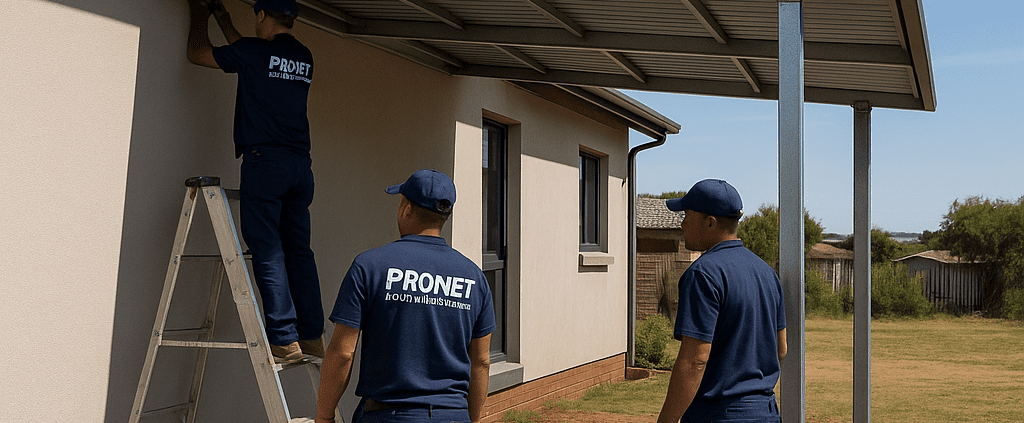
Wall mount carports are vehicle shelters that attach directly to an existing wall or structure on one side, with supporting posts on the opposite side. They’re a popular choice in Gauteng homes where space is limited but protection from sun damage and harsh weather is needed.
These structures are perfect for South African weather conditions. They shield vehicles from intense sunlight that fades paint and damages interiors, while also protecting against hail and rain which are common in Gauteng’s summer months. The beauty of wall mount carports is their versatility – they can be installed alongside homes, garages, or commercial buildings.
The design makes them more stable than freestanding options, as they leverage the strength of the existing wall. This is especially important in areas that experience strong winds or heavy rainfall. The wall connection also means you don’t need as many support beams, keeping the area underneath more open and accessible.
Many homeowners in Gauteng prefer these structures because they blend seamlessly with existing architecture. Whether you have a modern home or traditional design, there’s a wall mount carport option that will complement your property while providing practical protection for your vehicles.

How Much Does a Carport Cost in South Africa?
The cost of carports in South Africa varies widely based on several factors. You’re probably wondering what you’ll need to budget for a quality installation in Gauteng.
For wall mount carports specifically, prices typically range from R8,000 for basic single-vehicle designs to R25,000 or more for premium multi-vehicle structures. The final cost depends on:
- Size and capacity (single, double, or multiple vehicles)
- Materials used (steel, aluminum, polycarbonate)
- Roof design (flat, gable, or custom)
- Additional features (guttering, side panels)
- Installation complexity
It’s worth noting that IBR carports tend to be more expensive than basic shade netting options, but they offer superior durability and protection. The IBR sheet metal roofing material stands up better to Gauteng’s occasional severe weather events.
For comparison, cantilever carports typically start around R12,000 due to their specialized support structure, while pyramid carports range from R10,000 to R30,000 depending on size.
Here’s a quick price comparison of different carport types in Gauteng:
| Carport Type | Starting Price | Average Price (Standard Size) |
|---|---|---|
| Wall Mount | R8,000 | R15,000 |
| Cantilever | R12,000 | R18,000 |
| IBR | R10,000 | R16,000 |
| Pyramid | R10,000 | R20,000 |
| Shadeport | R5,000 | R12,000 |
When requesting quotes, make sure they include all aspects of installation – materials, labor, and any necessary groundwork. Some companies might quote a low initial price but add significant charges later for things like concrete footings or electrical work.
Types of Wall Mount Carports Available in Gauteng
Gauteng homeowners have several wall mount carport options to choose from. Each type has its own benefits depending on your specific needs and property layout.
Flat Roof Wall Mount Carports
These are the most common and economical option. The simple design features a flat or slightly sloped roof extending from your wall. They’re quick to install and provide good protection, though water drainage can sometimes be an issue during heavy Gauteng thunderstorms.
Gable Roof Wall Mount Carports
With their distinctive peaked design, these carports offer better water runoff and can match the aesthetic of many homes with similar roof designs. They cost a bit more than flat options but provide additional clearance height in the center.
Polycarbonate Roof Carports
These feature transparent or translucent roofing panels that allow natural light to pass through. They’re popular in areas where you want to maintain brightness while still providing protection. The material stands up well to Gauteng’s intense UV exposure.
IBR Sheet Wall Mount Carports
IBR carports use industrial steel sheeting that’s extremely durable and weather-resistant. The corrugated design helps with water runoff and provides excellent protection against hail – a significant concern in Gauteng’s summer months.
Semi-Cantilever Wall Mounts
These hybrid designs combine elements of wall mounting with cantilever support systems. Semi-cantilever carports offer greater stability while minimizing ground posts, creating a more open feel underneath.
Many Gauteng homeowners also consider specialized options like shadeports for more affordable protection, particularly for secondary vehicles or temporary coverage needs.
When selecting a wall mount carport, think about your specific weather challenges. Gauteng experiences everything from intense summer heat to dramatic thunderstorms, so your carport needs to handle these conditions while protecting your vehicle.
Installation Process for Wall Mount Carports
Getting a wall mount carport installed properly is crucial for its longevity and safety. Let’s break down what the process actually looks like when working with reputable Gauteng installers.
Site Assessment
The installation begins with a thorough site assessment. Professionals will check:
- Wall integrity – ensuring it can support the carport structure
- Ground conditions – looking for potential drainage issues
- Clearance space – confirming adequate height and width
- Obstacles – identifying issues like utility lines or tree branches
Planning and Permits
Before any drilling starts, you’ll need to:
- Check with local authorities about permit requirements
- Review any homeowners association restrictions
- Finalize design specifications and measurements
- Schedule installation dates
Many areas in Gauteng require building permissions for permanent structures, even carports. A good installation company will help navigate this process.
Wall Mounting
The critical first step in the physical installation involves securing mounting brackets to your existing wall. This isn’t as simple as it sounds – the installer needs to:
- Locate wall studs or structural elements for secure attachment
- Use appropriate fasteners based on wall material
- Ensure brackets are perfectly level
- Apply waterproofing at connection points
Poor wall mounting is the most common cause of carport failures, so this step demands expertise.
Support Post Installation
On the opposite side from the wall, support posts must be properly anchored:
- Marking precise positions for each post
- Digging holes (typically 600mm deep for Gauteng soil conditions)
- Pouring concrete footings
- Setting posts with temporary bracing while concrete cures
The depth and width of footings depend on local soil conditions and carport size.
Frame Assembly and Roof Installation
Once the main supports are in place:
- Cross beams and purlins are attached to create the frame
- Roofing material is carefully secured to the framework
- Flashing is installed at the wall connection point
- Guttering may be added for water management
A professional installation typically takes 1-2 days for standard wall mount carports in Gauteng. The best providers on ProNet Shadeports Gauteng will clean up thoroughly after installation and provide a walkthrough of the completed structure.

Can I Put Walls on a Carport?
Yes, you absolutely can add walls to a carport – and many Gauteng homeowners do! Adding walls transforms a basic carport into something closer to a full garage while maintaining cost advantages.
There are several approaches to adding walls:
Partial Wall Additions
The most popular option is adding partial walls. This might include:
- A back wall for additional weather protection
- Side walls at half-height to block low-angle sun or rain
- Privacy screens on the street-facing side
These partial solutions maintain ventilation while increasing protection.
Full Wall Enclosure
A complete wall system turns your carport into an enclosed structure. This requires:
- Proper framing to support wall materials
- Consideration of door access (roller, swing, or sliding options)
- Potential adjustments to footings for the additional weight
- Ventilation planning to prevent moisture buildup
Before adding full walls, check local building regulations. In many Gauteng municipalities, fully enclosing a carport may reclassify it as a garage, requiring additional permits.
Material Options for Walls
When adding walls, you have several material choices:
- IBR sheeting – matches many carport roofs and offers durability
- Brick or block – permanent and secure but more expensive
- Wood paneling – aesthetic appeal but requires maintenance
- Vinyl or fabric screens – affordable and removable
The wall mount design actually makes wall additions simpler, as one side is already adjacent to an existing structure. Many wall mount carport designs can be retrofitted with walls, but it’s best when planned during the initial installation.
If you’re considering a future wall addition, mention this to your installer upfront. They can strengthen the framework accordingly and position supports to accommodate future walls without major modifications.
Do I Need a Foundation for a Carport?
This question comes up often from Gauteng homeowners planning carport installations. The short answer is yes – proper foundation work is essential for a stable, lasting carport structure.
However, wall mount carports have different foundation requirements than freestanding models. Let’s look at what you actually need:
Foundation Requirements for Support Posts
The free-standing side of your wall mount carport requires properly prepared foundations for each support post:
- Concrete footings (typically 600mm deep × 300mm wide in Gauteng soil)
- Reinforcement with rebar for larger structures
- Proper drainage consideration to prevent water pooling
For standard wall mount carports protecting 1-2 vehicles, individual post footings are usually sufficient rather than a complete slab.
Existing Surface Considerations
The type of surface where you’re installing affects foundation needs:
- Installing on an existing concrete driveway? Post holes will need to be cut through the concrete before pouring new footings.
- Installing on lawn or soil? A proper moisture barrier might be recommended beneath post footings.
- Installing on sloped ground? Step footings may be necessary to keep the carport level.
Wall Mounting Foundation Issues
The wall connection doesn’t require ground foundation work, but the wall itself must be structurally sound. Before installation, professionals should:
- Inspect the wall for cracks or weak points
- Identify proper attachment points to structural elements
- Ensure the wall can handle both downward weight and lateral wind forces
In some cases, wall reinforcement might be needed before mounting brackets can be installed.
When Full Slabs Make Sense
While not always necessary, full concrete slabs provide advantages:
- Creates a clean, usable space beneath the carport
- Improves drainage with proper sloping
- Prevents weed growth and maintenance issues
- Provides a stable surface for vehicle parking
Many Gauteng homeowners opt for a combination approach – concrete footings for structural support with a thinner concrete or paver surface installed later.
Skimping on foundation work is a major mistake that leads to sagging, leaning, or even collapsed carports during Gauteng’s seasonal storms. The cost of proper foundation work typically represents about 20-30% of your total carport investment.
Can You Fully Enclose a Carport?
You can definitely fully enclose a carport, effectively converting it into a garage-like structure. Many Gauteng homeowners start with an open carport and gradually enclose it as budget allows.
Enclosure Options and Considerations
When planning to enclose your wall mount carport, consider these options:
Door Types
- Roller doors – space-efficient but require headroom
- Swing doors – economical but need clearance space
- Sliding doors – good for wider openings without clearance issues
Wall Materials
- IBR sheeting matches most carport roofs for a unified look
- Brick walls provide security but are more expensive
- Wood or composite panels offer aesthetic options
Practical Additions
- Windows for natural light
- Pedestrian side door for access
- Ventilation systems to prevent moisture buildup
Legal and Structural Considerations
Before fully enclosing your carport, be aware of these important factors:
- Permit Requirements: In most Gauteng municipalities, converting a carport to an enclosed structure requires building permits. The requirements are stricter than for open carports.
- Structural Reinforcement: Enclosed structures face different wind loads and may need additional bracing or stronger support posts.
- Property Tax Implications: In some areas, enclosed carports may be classified as additions to your home’s living space, potentially affecting property taxes.
- Insurance Updates: Your home insurance policy might need updating to reflect the new enclosed structure.
Phased Enclosure Approach
Many homeowners find success with a phased approach:
- Install the basic wall mount carport structure
- Add side walls while keeping the front open
- Install doors as the final phase
This spreads the cost over time while allowing the space to be functional throughout the process. Quality carport installers in Gauteng can design your initial structure with future enclosure in mind, installing stronger footings and framework to support the additional elements.
When planning your enclosure, consider Gauteng’s climate challenges:
- Ventilation to prevent heat buildup in summer
- Water drainage systems for the rainy season
- Potential for solar panel integration on suitable roof designs
A professionally enclosed carport can add significant value to your property while providing secure, weather-protected parking that rivals a traditional garage at a lower overall cost.

Maintenance and Repair Tips for Wall Mount Carports
Keeping your wall mount carport in top condition isn’t complicated, but regular maintenance prevents costly repairs down the line. Here’s what Gauteng homeowners should know about caring for these structures.
Regular Maintenance Tasks
Establish a simple maintenance routine:
Monthly Checks
- Clear debris from the roof surface
- Check for water pooling after rain
- Look for early signs of rust on metal components
- Ensure drainage systems are flowing properly
Seasonal Maintenance
- Before rainy season: Check all seals and connections
- After storms: Inspect for damage or loose fittings
- Summer: Look for UV damage to polycarbonate roofing
- Winter: Clean gutters if installed
The wall connection point deserves special attention – it’s where most leaks and structural issues begin. Look for any gap developing between the carport and wall, which might indicate bracket failure.
Common Repair Issues
Wall mount carports in Gauteng typically need repairs for these common problems:
Roof Leaks
Leaks often occur at:
- Seams between roofing sheets
- Flashing points where the roof meets the wall
- Around fasteners that have worked loose
Quick repair with appropriate sealants can prevent water damage to both the carport and your vehicle.
Structural Problems
Watch for:
- Sagging roof sections
- Leaning support posts
- Bracket separation from the wall
- Rust development on structural elements
These issues demand prompt attention, as they can lead to catastrophic failure, especially during Gauteng’s storm season.
DIY vs. Professional Repairs
Some maintenance tasks are suitable for DIY:
- Tightening loose bolts and screws
- Applying rust protection to minor spots
- Clearing debris and cleaning surfaces
- Simple sealant application
However, structural repairs should be handled by professionals:
- Support post replacement or reinforcement
- Wall bracket repairs
- Major roof panel replacement
- Foundation issues
The team at ProNet Shadeports Gauteng can assess damage and recommend appropriate repairs before small issues become major problems.
Extending Carport Lifespan
With proper care, wall mount carports in Gauteng can last 15-20 years or more. To maximize lifespan:
- Apply protective coatings to metal components every 2-3 years
- Replace damaged roof sheets promptly to prevent water intrusion
- Keep trees trimmed to prevent branch damage
- Clean surfaces regularly to prevent material degradation
Many repair issues can be avoided entirely through professional installation. Proper initial construction with quality materials and appropriate foundations prevents the most common failure points.
Frequently Asked Questions
How long does it take to install a wall mount carport?
For standard residential wall mount carports in Gauteng, professional installation typically takes 1-2 days. Larger or more complex designs may require 3-4 days. Custom designs with special features can extend the timeline.
Can wall mount carports withstand Gauteng’s storms?
Yes, properly installed wall mount carports can withstand typical Gauteng weather conditions including strong winds and heavy rain. The wall connection provides excellent stability compared to freestanding designs. For areas with extreme weather, additional bracing can be incorporated.
Do wall mount carports add value to my property?
While not as valuable as a garage, a well-designed and professionally installed wall mount carport typically adds 50-70% of its cost to your property value. Enclosed carports add even more value, sometimes approaching 80-90% of construction cost.
Can I install solar panels on my carport roof?
Yes, many wall mount carport designs can accommodate solar panels. The structure needs to be engineered to handle the additional weight and wind resistance. This option is increasingly popular in Gauteng as homeowners look for solutions to load shedding.
What maintenance does a wall mount carport need?
Basic maintenance includes regular cleaning, checking for loose fasteners, inspecting seals and connections, and looking for early signs of rust or damage. The frequency depends on local conditions, but quarterly inspections are recommended in Gauteng’s variable climate.
Can I install a wall mount carport myself?
While technically possible, DIY installation isn’t recommended. Professional installation ensures proper structural integrity, correct attachment to the existing wall, and appropriate foundations. Most warranty coverage also requires professional installation.
How much clearance is needed around vehicles?
For comfortable access, allow at least 1 meter clearance on each side of vehicles and 1.5 meters at entry/exit points. Standard height clearance should be minimum 2.1 meters, though higher clearance (2.4-2.7m) is recommended for SUVs and vehicles with roof accessories.
Can lighting be added to my carport?
Yes, many wall mount carports can easily accommodate lighting installations. Options include LED strip lighting along support beams, motion-sensor security lights, or even solar-powered lighting systems that don’t require electrical connections.
Key Takeaways
- Pyramid carports offer superior drainage and aesthetic appeal compared to flat designs
- Professional installation typically takes 1-2 days with proper ground preparation
- Quality materials (galvanized steel, chromadek) ensure 15-25+ years of durability
- Proper anchoring to concrete foundations is crucial for stability and longevity
- Regular maintenance (cleaning, rust inspection) extends carport lifespan significantly
- Local Gauteng installation costs range from R9,000 to R25,000 depending on size and materials
What Are Pyramid Carports?
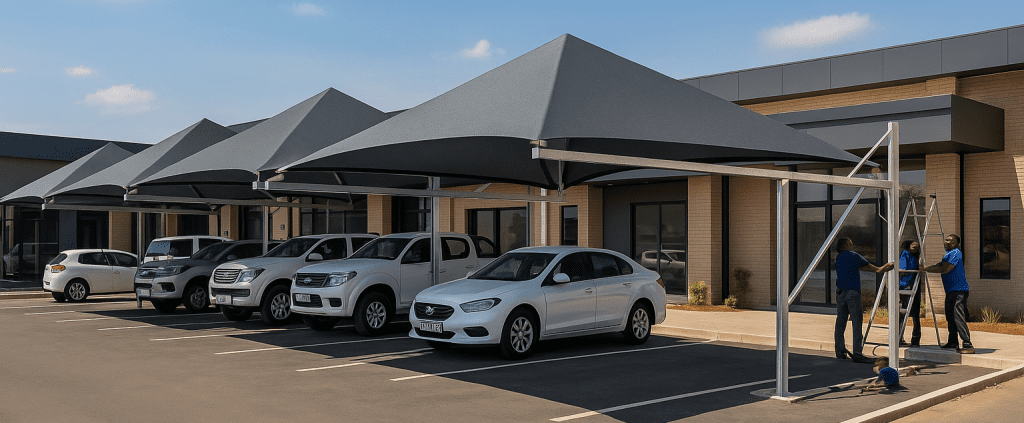
Pyramid carports have become incredibly popular in Gauteng homes, and there’s a good reason why. These structures get their name from the distinctive pyramid-shaped roof that peaks in the center. The design isn’t just pretty to look at—it’s actually super practical for our local weather.
The sloped roof of pyramid carports makes rainwater run off easily, which is a big plus during Gauteng’s heavy summer storms. Water doesn’t collect on top like it might with flatter designs. I’ve installed hundreds of these units over the years, and clients always comment on how much better they look than standard flat carports.
What sets pyramid carports apart from other styles like cantilever carports or IBR carports is the balanced, symmetrical design. They’ve got support posts on all corners, making them really stable in windy conditions. The central peak can be customized in height, which affects both the appearance and drainage capacity.
Most pyramid carports in Gauteng use either galvanized steel or chromadek sheeting for the roof. The steel frame comes in different thickness options (typically 2mm to 3.5mm), which affects the overall strength and price. Some homeowners even opt for decorative elements on the support posts to match their home’s architecture.
The size options are pretty flexible too. Single-vehicle units typically measure about 3m × 5m, while double carports start around 6m × 5m. We can customize these dimensions based on the vehicles you need to protect and the available space on your property.

How Durable Are Carports?
Let’s be honest, nobody wants to spend money on a carport that’ll fall apart after a few years. The durability of carports varies massively depending on materials, installation quality, and local weather conditions.
In Gauteng, a well-built pyramid carport should last at least 15-25 years with proper maintenance. The galvanized steel frames we use resist rust and corrosion, while quality chromadek sheeting doesn’t fade or corrode easily under our harsh sun. I’ve seen properly maintained units still looking great after 20+ years of service.
The thickness of the steel frame makes a big difference in durability. Budget options might use 1.6mm steel, but I don’t recommend going below 2mm for longevity. The premium units with 3mm+ steel frames can withstand serious weather events, including the occasional hail storms we get in Gauteng.
Weather resistance factors to consider:
| Weather Factor | How Pyramid Carports Handle It |
|---|---|
| Heavy Rain | Excellent (steep slopes for drainage) |
| Strong Winds | Good (with proper anchoring) |
| Hail | Good to Excellent (depending on sheet thickness) |
| UV Exposure | Good (with UV-resistant finishes) |
| Heat | Excellent (provides shade while allowing airflow) |
When comparing to other structures, pyramid carports tend to outperform flat shadeports in terms of longevity. The drainage advantage means less water sits on the structure, reducing rust and deterioration risks.
Maintenance plays a huge role in extending carport life. Just hosing down the structure occasionally to remove dust and debris can prevent premature aging. I always tell my clients to check for early signs of rust around joints and bolts—catching these early can add years to your carport’s life.
How Are Carports Anchored to the Ground?
The anchoring system is probably the most overlooked aspect of carport installation, but it’s actually super important. A carport that isn’t properly anchored can become a safety hazard during strong winds.
In Gauteng, we primarily use three anchoring methods:
- Concrete Footings – The posts are set into concrete footings that extend below the frost line (typically 400-600mm deep). This is the most secure method and what I recommend for most installations.
- Surface Mounting – Metal base plates are bolted to an existing concrete slab using expansion bolts. This works well for wall-mounted carports or when working with existing paving.
- Ground Anchors – Specialized metal spikes or augers are driven into the ground. These are less common and generally only suitable for temporary structures.
For pyramid carports specifically, we typically use concrete footings for the corner posts. The size of these footings depends on soil conditions and carport size, but generally, we dig holes about 450mm in diameter and 600mm deep. The concrete needs to cure for at least 48 hours before the frame is attached.
I’ve seen poorly anchored carports lift completely off the ground during strong Gauteng storms. Trust me, you don’t wanna cut corners here! The anchoring system should account for both upward and lateral forces.
Local soil conditions in Gauteng can vary widely from clay to sandy, which affects the anchoring requirements. Clay soils might need wider footings, while sandy soils might need deeper ones. A proper site assessment before installation is essential.
For DIY enthusiasts, the anchoring is definitely the trickiest part. It’s worth getting a professional opinion on your specific site conditions before proceeding. The few extra rands spent on proper anchoring will save thousands in potential damage later.
How Do You Fit a Carport?
Fitting a carport isn’t rocket science, but it does require careful planning and execution. The process typically takes 1-2 days for a standard pyramid carport when done by professionals.
Here’s a simplified breakdown of the installation process:
- Site Preparation
- Mark out the location
- Check for underground utilities
- Clear vegetation and obstacles
- Level the ground if necessary
- Foundation Work
- Dig holes for concrete footings
- Mix and pour concrete
- Allow proper curing time (48+ hours)
- Frame Assembly
- Erect support posts
- Attach horizontal beams
- Install roof rafters
- Check all alignments and levels
- Roof Installation
- Attach roof sheeting
- Install flashing and trim
- Add any guttering if required
- Finishing
- Final adjustments and tightening
- Clean-up and waste removal
- Final inspection
Common mistakes I see in DIY installations include poor alignment of posts (leading to a crooked structure), inadequate bracing, and incorrect roof pitch. The pyramid design requires precise angle calculations to ensure proper fit of the roof sheets.
The tools needed for carport installation include:
- Post hole digger or auger
- Concrete mixer
- Level and plumb bob
- Tape measure
- Power drill
- Angle grinder
- Adjustable wrench set
- Ladder or scaffolding
For semi-cantilever carports, the process is slightly different as they combine wall mounting with free-standing supports. These require secure fixing to existing structures, which adds complexity.
If you’re not confident in your DIY skills, hiring professionals is definitely worth considering. A professional installation ensures proper structural integrity and typically comes with some form of warranty. Most Gauteng installers offer free quotes, so you can compare options before committing.

What Is a Carport Entrance?
The carport entrance might seem like a simple concept, but there’s actually quite a bit to consider here. It’s not just about where you drive in—it affects daily usability and the overall look of your property.
A carport entrance refers to the open side(s) of the structure through which vehicles enter and exit. For pyramid carports, you can design single entrances (one open side), double entrances (two opposite sides open), or even multiple entrances depending on your needs.
Factors to consider when planning your carport entrance include:
- Width clearance – Should be at least 2.4m for single vehicles, 5m+ for double carports
- Height clearance – Minimum 2.1m, but 2.4m+ is better for SUVs or vehicles with roof racks
- Approach angle – Consider the turning radius needed to enter comfortably
- Relationship to house entrance – Ideally aligned with paths to your home
- Drainage direction – Ensure water runs away from the entrance
- Security considerations – Position to allow good visibility from house windows
I’ve helped clients integrate their carport entrances with existing driveways and garden pathways. The most successful designs consider the natural flow of movement around the property. For example, a carport entrance that aligns with your kitchen door makes unloading groceries much easier.
In Gauteng’s rainy season, proper drainage around the entrance prevents muddy conditions. This might involve slight grading of the ground, installing drainage channels, or using permeable paving materials.
Some homeowners add decorative features around the entrance, like landscaping or lighting, to enhance the appearance. Solar-powered path lights are particularly popular as they improve visibility and security without additional electrical work.
Installation of Pyramid Carports in Gauteng
The installation process for pyramid carports in Gauteng requires careful planning and execution. Local weather conditions and building regulations add some specific considerations you should know about.
Before installation begins, it’s important to check whether you need municipal approval. In many Gauteng municipalities, structures under a certain size don’t require full building plans, but it’s always worth checking your local regulations. Some estates and complexes have their own rules about carport installations too.
Step-by-step professional installation typically follows this process:
- Initial Consultation and Site Assessment
- Property evaluation and measurements
- Discussion of design options and positioning
- Assessment of drainage patterns and soil conditions
- Quote preparation and material selection
- Design Finalization
- Determine exact dimensions and height
- Select roof material and color
- Choose optional extras (gutters, side panels, etc.)
- Finalize placement on property
- Ground Preparation
- Mark out the installation area
- Excavate for footings (typically 600mm deep in Gauteng’s soil conditions)
- Install any necessary drainage components
- Concrete Foundation
- Pour concrete footings
- Insert anchor bolts or post supports
- Allow 2-3 days for proper curing (weather dependent)
- Frame Construction
- Erect main support posts (usually 76mm or 101mm diameter steel)
- Install horizontal beams and rafters
- Add cross-bracing for stability
- Check all angles for proper pyramid shape
- Roof Installation
- Attach purlins to support roof sheeting
- Install roof sheets (chromadek or zinc-aluminum)
- Add ridge cap and flashing
- Install guttering if required
- Final Touches
- Apply any touch-up paint to bolts or cut edges
- Clean up the site completely
- Final inspection and client walkthrough
The typical timeframe for professional installation in Gauteng is 1-2 days for the structure itself, plus any concrete curing time. Weather delays are common during the rainy season (October to April), so plan accordingly.
Common challenges specific to Gauteng installations include:
- Rocky ground – Parts of Gauteng have shallow bedrock that can complicate footing excavation
- Clay soil – Expansive clay soils in some areas require deeper or wider footings
- Wind considerations – Certain areas experience strong seasonal winds requiring additional bracing
- Security integration – Many homeowners want carports designed to accommodate security gates or cameras
Costs for professional installation in Gauteng typically range from R9,000 for a basic single carport to R25,000+ for larger custom designs. Factors affecting price include size, material quality, roof type, and optional extras like guttering or lighting.
I always recommend getting at least three quotes from different suppliers before making your decision. The cheapest quote isn’t always the best value—look for companies with good reviews, proper insurance, and a solid portfolio of completed projects in the Gauteng area.

Repairs and Maintenance of Pyramid Carports
Even the best-built pyramid carports need some TLC to keep them looking good and functioning properly. Regular maintenance prevents small issues from becoming expensive repairs.
Common problems that require repairs in Gauteng carports include:
- Rust and Corrosion
- Most common around joints, bolts, and cut edges
- Often starts as small spots that spread if untreated
- Can compromise structural integrity if severe
- Loose Fasteners
- Vibration from wind can gradually loosen bolts and screws
- Results in rattling sounds during windy conditions
- Creates potential weak points in the structure
- Roof Damage
- Dents from falling branches or severe hail
- Displaced or loose roof sheets
- Deteriorated rubber washers causing leaks
- Post Movement
- Shifting due to soil movement or poor initial installation
- Can cause the entire structure to become unstable
- Often noticed when the carport starts looking crooked
- Gutter Issues
- Clogging with leaves and debris
- Incorrect fall causing water pooling
- Disconnection from downpipes
A simple maintenance schedule I recommend to my clients includes:
Monthly:
- Visual inspection for any obvious issues
- Remove debris from roof and gutters
- Check for any loose fasteners or rattles
Quarterly:
- Wash the structure with mild soapy water
- Inspect all joints and connections
- Check for early signs of rust or corrosion
Annually:
- Detailed inspection of all structural components
- Tighten all bolts and fasteners
- Touch up any paint or protective coating as needed
- Check and repair any sealants around flashing
For DIY repairs, always ensure you’re using compatible materials. Mixing metals (like aluminum with steel) can actually accelerate corrosion through galvanic reaction. For roof repairs, matching the exact profile of existing sheets is important for both appearance and function.
When it comes to professional repair services in Gauteng, expect to pay around R350-R550 per hour for labor, plus materials. Minor repairs like replacing a few fasteners or small touch-ups might cost R500-R1,000, while major structural repairs could run R3,000-R8,000 depending on the extent of damage.
Signs that indicate you need professional help rather than DIY repairs include:
- Visible sagging or leaning of the structure
- Cracks in support posts or main beams
- Multiple roof sheets that have come loose
- Significant rust that has compromised structural elements
- Foundation movement or cracking
For carports over 10 years old, a professional inspection every 2-3 years is a worthwhile investment, even if everything seems fine. Early intervention can extend the life of your carport significantly.
Final Thoughts
Pyramid carports offer a practical and attractive solution for vehicle protection in Gauteng’s challenging climate. Their distinctive design provides excellent drainage, good stability, and an appealing aesthetic that complements most architectural styles.
Whether you’re considering installation of a new carport or maintaining an existing one, understanding the key aspects of design, materials, and proper construction techniques will help ensure you get a structure that lasts for decades rather than years.
For those in Gauteng looking for professional assistance with pyramid carport installation or repairs, contact qualified local specialists who understand the region’s specific challenges and requirements. The investment in professional installation typically pays for itself through longer service life and fewer problems down the road.
Remember that proper maintenance is essential regardless of how well your carport was initially installed. Simple regular checks and prompt attention to minor issues will keep your carport functioning properly and looking great for many years to come.
Frequently Asked Questions
How much does a pyramid carport cost in Gauteng?
Prices in Gauteng typically range from R9,000 for a basic single carport to R25,000+ for larger custom designs with premium materials. Factors affecting cost include size, material quality, and optional extras like guttering or side panels.
Do I need permission to install a carport in Gauteng?
Many municipalities in Gauteng don’t require full building plans for carports under a certain size (typically 40m²), but regulations vary by area. Always check with your local municipality before installation. Housing estates and complexes often have their own additional regulations.
How long does it take to install a pyramid carport?
Professional installation typically takes 1-2 days for the structure itself, plus 2-3 days for concrete foundations to cure properly. Weather conditions and site preparation requirements can extend this timeframe.
Can I install a pyramid carport myself?
While DIY installation is possible for those with good construction skills, professional installation ensures proper structural integrity and typically comes with warranties. The most challenging aspects for DIYers are usually foundation work and achieving the correct roof angles.
What is the best material for a pyramid carport in Gauteng’s climate?
Galvanized steel frames with chromadek roof sheeting offer the best durability in Gauteng’s climate. The chromadek provides excellent UV resistance while the galvanized steel resists rust and corrosion.
How do I maintain my pyramid carport?
Regular maintenance includes removing debris from the roof and gutters, washing the structure periodically with mild soapy water, checking for loose fasteners, and inspecting for early signs of rust or corrosion. Annual tightening of all bolts and fasteners is also recommended.
Can a pyramid carport be relocated?
Yes, professionally installed carports can usually be disassembled and relocated, though some components like concrete footings will need to be replaced. The cost of relocation is typically 50-70% of a new installation.
What colors are available for pyramid carports?
Most suppliers in Gauteng offer a range of standard colors including white, charcoal, light grey, brown, and green. Custom colors are available from some suppliers at additional cost. Color choice affects both aesthetics and heat absorption, with lighter colors staying cooler in Gauteng’s hot climate.
